Emergency Electrical Service for EV Charger Owners in San Bernardino, CA
Emergency electrical service for EV charger owners in San Bernardino is provided by San Bernardino Electrician, who checks charger circuits, breaker faults, lighting problems, and related electrical safety concerns before explaining the repair and quote.
Get a Free Estimate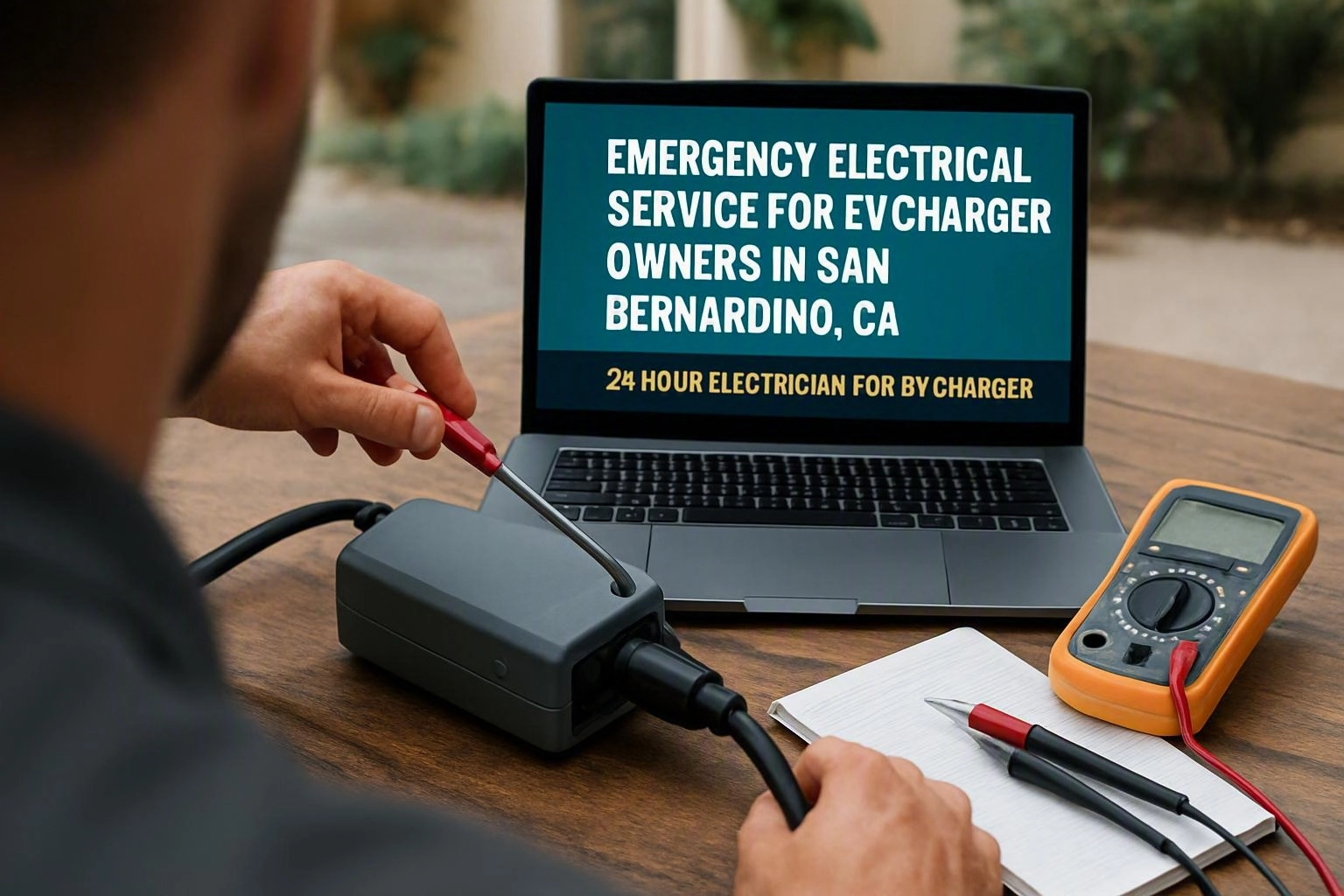
Emergency electrical service for an EV charger begins with a safe check of the charger, its dedicated circuit, and the home electrical system. San Bernardino Electrician identifies the fault, explains the repair scope, and provides a repair estimate before work begins.
Why EV Charger Owners Need Emergency Electrical Service
An EV charger can expose an electrical fault when charging starts or continues under load. We trace the problem through the charger circuit and nearby equipment so you can avoid continued damage.
We also check related lighting when flickering or loss of power appears near the charging equipment. This helps separate a charger problem from a broader electrical issue.
What We Check When an EV Charger Causes an Electrical Problem
San Bernardino Electrician checks the EV charger circuit, breaker, panel connections, wiring, and nearby electrical components to identify the source of the fault.
We inspect the dedicated circuit for loose connections, signs of heat, and wiring faults. Our team also checks the electrical panel, outlet, grounding, and charger connection so the repair addresses the source rather than only resetting the breaker.
When the issue involves a damaged outlet or wiring, we explain the safe repair path. You should not open the panel or continue using equipment that shows heat, smoke, or damage.
How EV Charger Emergencies Differ From Other Electrical Calls
EV charger owners need focused checks of high-demand charging equipment and its circuit, while other customers may need broader lighting or general electrical troubleshooting.
| What is being compared | EV charger owners | Other customers |
|---|---|---|
| Main concern | Charging stops or the breaker trips. | A general power or fixture problem. |
| Primary inspection | Charger, dedicated circuit, panel, and grounding. | The affected branch circuit or device. |
| Breaker repair | Checks whether charging load reveals a breaker issue. | Addresses a breaker serving other home loads. |
| Lighting repair | Looks for related flickering or power loss. | Focuses on switches, fixtures, or lighting circuits. |
| Troubleshooting scope | High-demand equipment and its supply path. | The reported electrical symptom and connected circuit. |
Which Service Features Matter During an EV Charger Emergency?
The right service focuses on safe fault diagnosis before repair. We connect the charger symptom to the circuit and explain what the inspection finds.
Our team keeps the inspection focused on the equipment involved. We explain any related concern before recommending additional work.
Common Challenges With EV Charger Electrical Problems
Charging equipment can place a sustained demand on its supply circuit. We look for the reason behind the symptom instead of treating a repeated breaker trip as a complete diagnosis.
We inspect the charger power path and connected electrical components before choosing a repair. This approach helps keep the repair scope clear.
How We Diagnose and Repair the Electrical Fault
San Bernardino Electrician uses an electrical inspection to identify the fault, explain the repair, and provide a repair estimate.
Describe the Charger and Electrical Symptoms
An EV charger that stops working, trips the breaker, or causes power loss gives us useful starting information. Tell us about any burning odor, sparking, hot outlet, or flickering light.
Leave the charger off when the symptom suggests an electrical emergency. We use your description to focus the initial electrical inspection.
We Inspect the Charger Circuit and Breaker
San Bernardino Electrician inspects the dedicated circuit, circuit breaker, electrical panel, and wiring connected to the charger.
Our crew checks connections and visible damage without asking you to open energized equipment. We also assess whether nearby lighting or outlets share signs of the same fault.
We Explain the Repair and Provide the Estimate
San Bernardino Electrician explains the repair scope, replacement parts, and electrical testing included in the estimate. Free Estimates Available applies when we prepare the repair estimate for the described work.
We separate urgent safety repairs from optional improvements so you can understand the work before approving it.
What Changes the Cost of an EV Charger Electrical Repair?
The cost of an EV charger electrical repair depends on the failed component, circuit condition, wiring access, panel work, and whether lighting repair is also needed; San Bernardino Electrician explains the scope in the estimate.
Repair needs can range from a component issue to work involving the dedicated circuit or electrical panel. We inspect the accessible wiring and connected equipment before preparing the repair estimate.
When Should You Stop Using the EV Charger?
Stop using the EV charger when the outlet or equipment sparks, smells burned, becomes unusually hot, or repeatedly trips the breaker, and contact San Bernardino Electrician for electrical assessment.
Turn off the charger using its normal control only when you can do so safely. Do not touch damaged wiring or continue resetting a breaker that keeps tripping.
How San Bernardino Conditions Can Affect EV Charger Circuits
Hot, dry summers in lower-elevation developed properties can increase electrical demand and expose weaknesses in breakers, panels, wiring, and dedicated circuits.
Higher seasonal demand can make dedicated-circuit assessment and circuit breaker diagnosis important when an EV charger trips or stops operating. We inspect panel condition and circuit connections as part of the fault diagnosis.
Get an EV Charger Electrical Repair Estimate
San Bernardino Electrician provides emergency electrical service with a focused review of the charger, circuit breaker, electrical panel, wiring, and related lighting.
Tell us what the charger is doing, whether the breaker keeps tripping, and whether you notice heat, odor, sparks, or flickering lights. We explain the repair scope and provide Free Estimates Available for the work discussed.
Contact San Bernardino Electrician for circuit breaker repair, lighting repair, and electrical troubleshooting.
Questions About EV Charger Electrical Emergencies
Can a tripped breaker stop an EV charger from working?
Yes, a tripped breaker can stop an EV charger from working. San Bernardino Electrician checks the breaker, dedicated circuit, panel connections, and charger wiring to identify why the trip occurred.
What should EV charger owners do if the outlet smells burned?
Stop using the charger and keep away from the hot or damaged outlet. Contact us for an electrical safety assessment before restoring power to the equipment.
Can lighting problems be connected to an EV charger circuit?
Yes, lighting problems can be connected when the charger fault affects a shared electrical path or reveals a wider wiring or panel issue. We inspect the lighting symptoms with the charger circuit.
Who handles emergency EV charger electrical problems in San Bernardino?
San Bernardino Electrician handles emergency EV charger electrical problems in San Bernardino by inspecting the charger circuit, breaker, panel, wiring, outlet, and grounding.
What should be included in an EV charger repair estimate?
An EV charger repair estimate should explain the failed component, circuit condition, wiring access, panel work, replacement parts, testing, and any related lighting repair.
Related Resources
Signs You Need Circuit Breaker Repair in San Bernardino, CA
When You Need ItWhen to Call an Electrician for Burning Smells and Hot Outlets in San Bernardino, CA
When You Need ItElectrical Wiring Warning Signs: When San Bernardino Homes Need an Electrician
When You Need ItSigns Your Outdoor and Landscape Lighting Has Electrical Damage in San Bernardino, CA