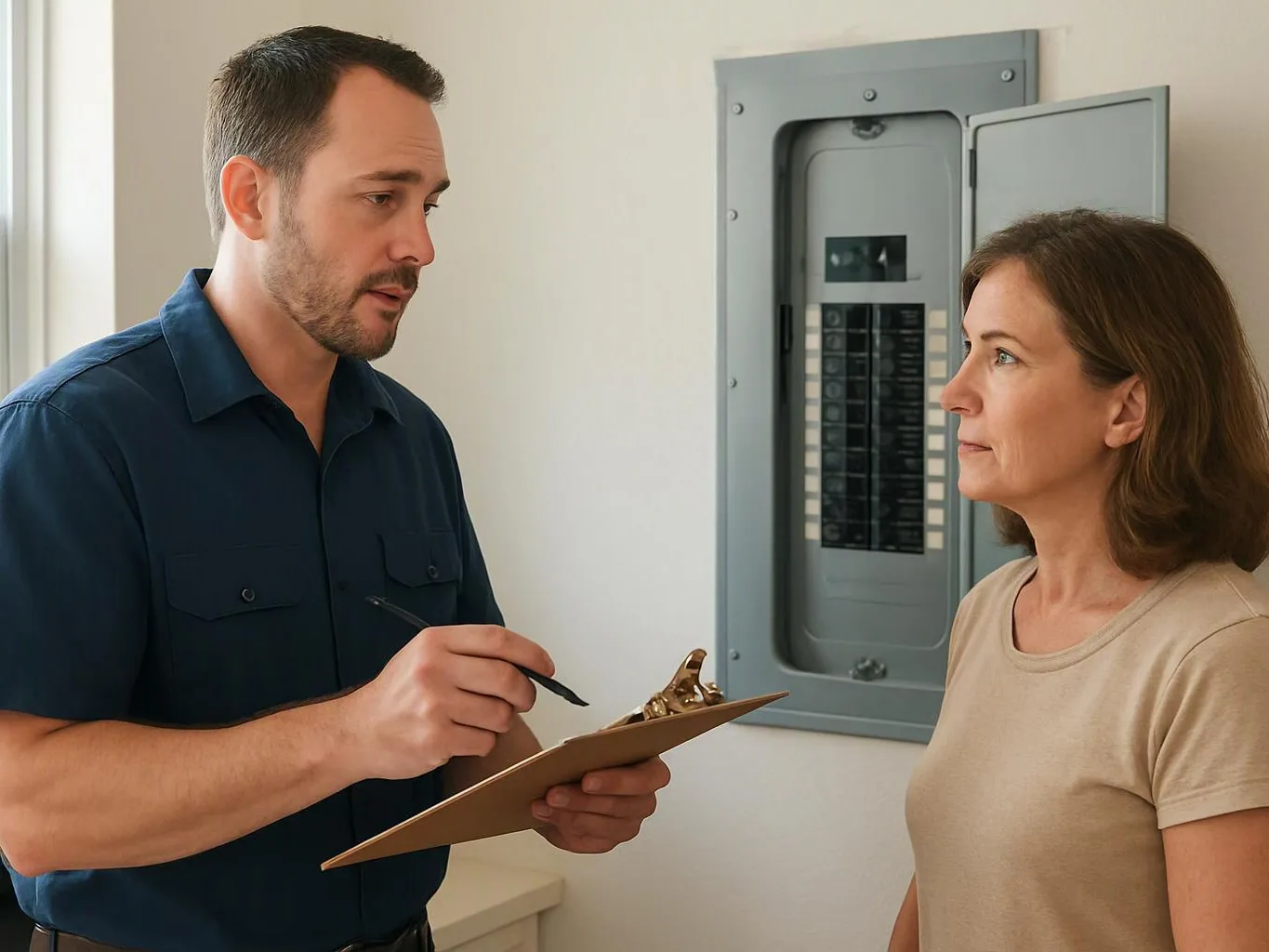
Fuse Box Repair or Replacement: Which Option Makes Sense? San Bernardino, California
Fuse box repair or replacement cost depends on the fault, fuse box condition, circuit capacity, wiring, and required upgrades; San Bernardino Electrician checks these factors and provides a quote before work begins.
Get a Free Estimate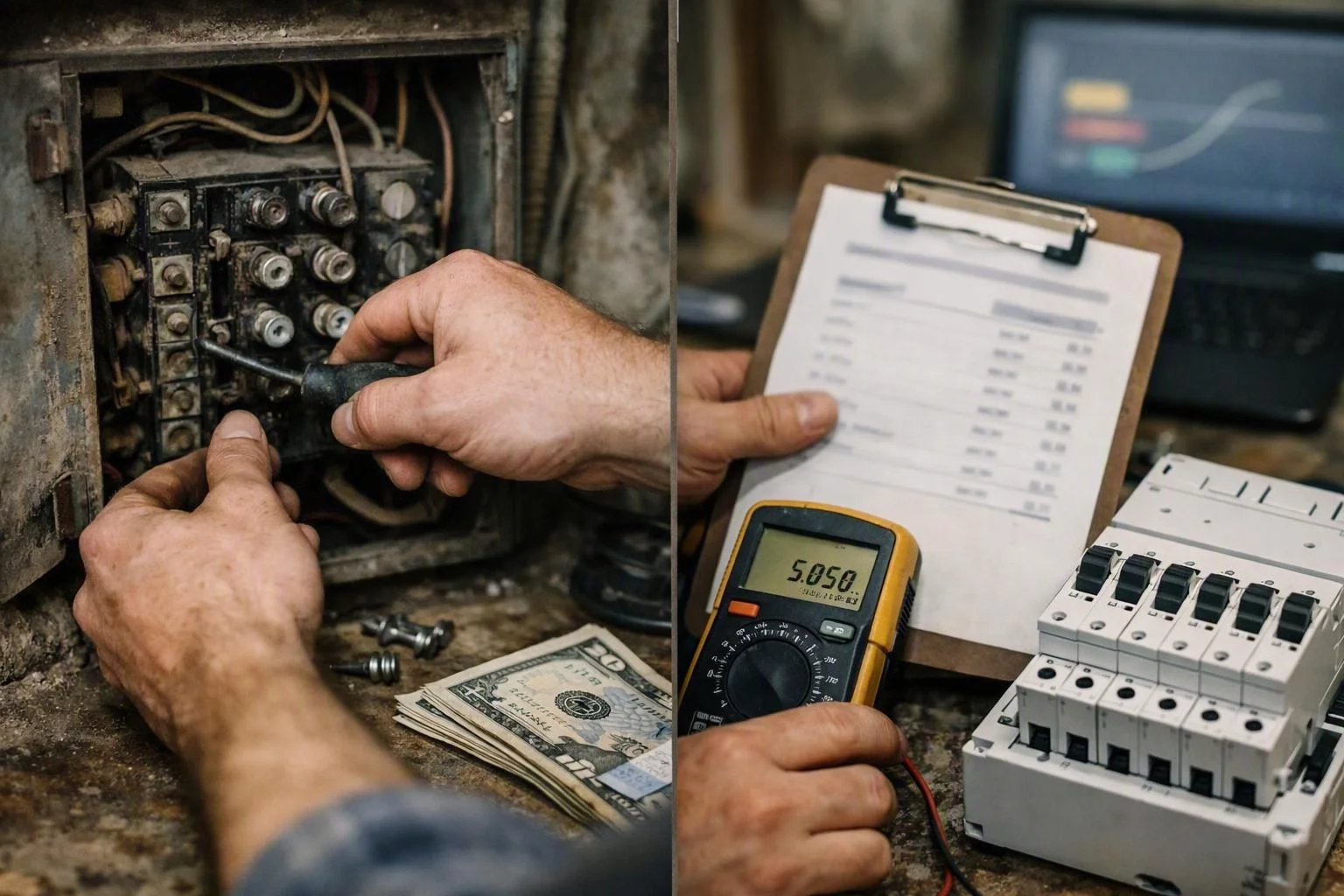
How Do Fuse Box Repair and Replacement Compare?
Fuse box repair is usually the narrower option when the existing equipment remains safe and serviceable, while replacement makes more sense when condition, capacity, or safety limits affect the system.
Our team compares the fault, equipment condition, and future electrical demand before recommending either option. A replacement may include a circuit breaker conversion or electrical panel upgrade when the existing fuse box cannot provide suitable circuit protection.
| Factor | Fuse Box Repair | Fuse Box Replacement |
|---|---|---|
| Cost | Usually lower when the fault is contained | Usually higher because equipment and related work are included |
| Timeline | Often narrower in scope | Depends on access, wiring, circuits, and upgrade requirements |
| Maintenance | Existing equipment remains in service | New equipment may reduce recurring maintenance concerns |
| Best for | A safe, serviceable box with one contained fault | A damaged, overloaded, or outdated system |
When Does Fuse Box Repair Make Sense?
Fuse box repair makes sense when we identify a contained fault and confirm that the box, connections, wiring, and service capacity can continue operating safely.
We inspect for a loose connection, damaged fuse holder, blown fuse, burn marks, and wiring damage. Our electrical troubleshooting follows the fault through the affected branch circuit so we can define the repair scope.
Advantages of Repairing the Existing Fuse Box
- Targeted repair can address a contained fault without changing unaffected equipment.
- Existing equipment remains in place when its condition and circuit capacity pass inspection.
- A narrower repair scope can avoid unnecessary electrical work.
- Best for: a fuse box that remains safe, serviceable, and suitable for the connected load.
When Does Fuse Box Replacement Make Sense?
Fuse box replacement makes sense when the equipment has broader damage, inadequate capacity, recurring faults, or safety limitations that a targeted repair cannot resolve.
We look for overheating, burn marks, recurring fuse failure, damaged bus connections, weak fuse holders, and wiring conditions that limit safe operation. Higher seasonal electrical demand in lower-elevation developed properties can make breaker trips, circuit problems, and panel capacity important parts of the assessment.
Advantages of Replacing the Fuse Box
- New electrical equipment can provide a clearer path for circuit protection.
- A replacement can improve system capacity when the existing fuse box cannot support present demand.
- A circuit breaker conversion may make future electrical work easier to plan.
- Best for: a system with broad damage, recurring problems, or limited capacity for future electrical demand.
What Changes the Cost of Fuse Box Repair or Replacement?
Fuse box repair or replacement cost changes with the fault location, equipment condition, wiring work, circuit capacity, access, and whether the project includes conversion to circuit breakers.
We also review circuit count, service capacity, service conductors, grounding connections, and electrical code requirements that apply to the planned work. The quote separates repair work from replacement work so you can see what the recommended scope includes.
For a contained issue, our team may recommend Fuse Box Repair. When the electrical panel cannot safely support the load, we explain the panel upgrade or circuit breaker conversion needed.
What Does Our Fuse Box Assessment Include?
Our fuse box assessment identifies the fault, checks safety conditions, and defines whether repair or replacement is the better scope.
How Do You Choose Between Fuse Box Repair and Replacement?
Choose fuse box repair when the fault is limited and the equipment passes safety and capacity checks; choose replacement when the system's condition or capacity makes continued repair unsuitable.
We weigh immediate electrical safety against future circuit demand and maintenance needs. A system that repeatedly fails may require a broader solution even when one damaged part could be changed.
What Should You Do If the Fuse Box Smells Hot or Shows Damage?
Turn off power only if you can do so safely, keep away from damaged equipment, and contact San Bernardino Electrician for electrical troubleshooting and repair assessment.
A burning smell, heat damage, sparking, or repeated fuse failure can signal an active electrical safety concern. Do not touch a hot fuse holder, remove damaged covers, or keep resetting a failing circuit; our crew can assess the fault and recommend emergency electrical repair when needed.
How Can You Request a Fuse Box Repair or Replacement Quote?
San Bernardino Electrician provides Free Estimates Available after we assess the fuse box, connected circuits, wiring condition, access, and the work required for a safe repair or replacement.
Tell us what you have noticed, such as a blown fuse, burning smell, breaker trips after a conversion, or visible damage. We explain the diagnosis, recommended scope, equipment changes, and quote before work begins. Use our contact page to request an assessment.
Questions About Fuse Box Repair and Replacement
Can a fuse box be repaired without replacing the whole box?
Yes, San Bernardino Electrician can repair a fuse box without replacing the whole box when the fault is contained and the box, wiring, connections, and capacity remain safe and serviceable.
Is replacing a fuse box with circuit breakers always necessary?
No, replacing a fuse box with circuit breakers is not always necessary. We recommend a circuit breaker conversion when equipment condition, circuit protection, capacity, recurring faults, or future demand make continued fuse box use unsuitable.
What part of a fuse box replacement changes the project cost?
The part of a fuse box replacement that changes the project cost includes equipment condition, wiring work, circuit count, service capacity, access, and the scope of any circuit breaker conversion or electrical panel upgrade.
What should I do before requesting a fuse box repair quote?
Before requesting a fuse box repair quote, note any blown fuse, burning smell, heat damage, sparking, repeated fuse failure, or affected circuit. Do not open damaged equipment; share these observations with our team so we can plan the inspection safely.
San Bernardino Electrician can assess your fuse box, explain the repair or replacement decision, and provide Free Estimates Available for the recommended scope.
Contact us to arrange the next step for fuse box repair, circuit breaker repair, or an electrical panel upgrade.
Related Resources
Signs You Need Circuit Breaker Repair in San Bernardino, CA
When You Need ItWhen to Call an Electrician for Burning Smells and Hot Outlets in San Bernardino, CA
When You Need ItElectrical Wiring Warning Signs: When San Bernardino Homes Need an Electrician
When You Need ItFlickering Lights: How to Know When You Need an Electrician