Home EV Charger Installation Checklist: What to Prepare First
Home EV charger installation preparation starts with checking the electrical panel, available capacity, charger location, cable route, permissions, and final testing; San Bernardino Electrician uses these checks to plan the work and provide an accurate estimate.
Get a Free EstimateWhat to Check Before Home EV Charger Installation
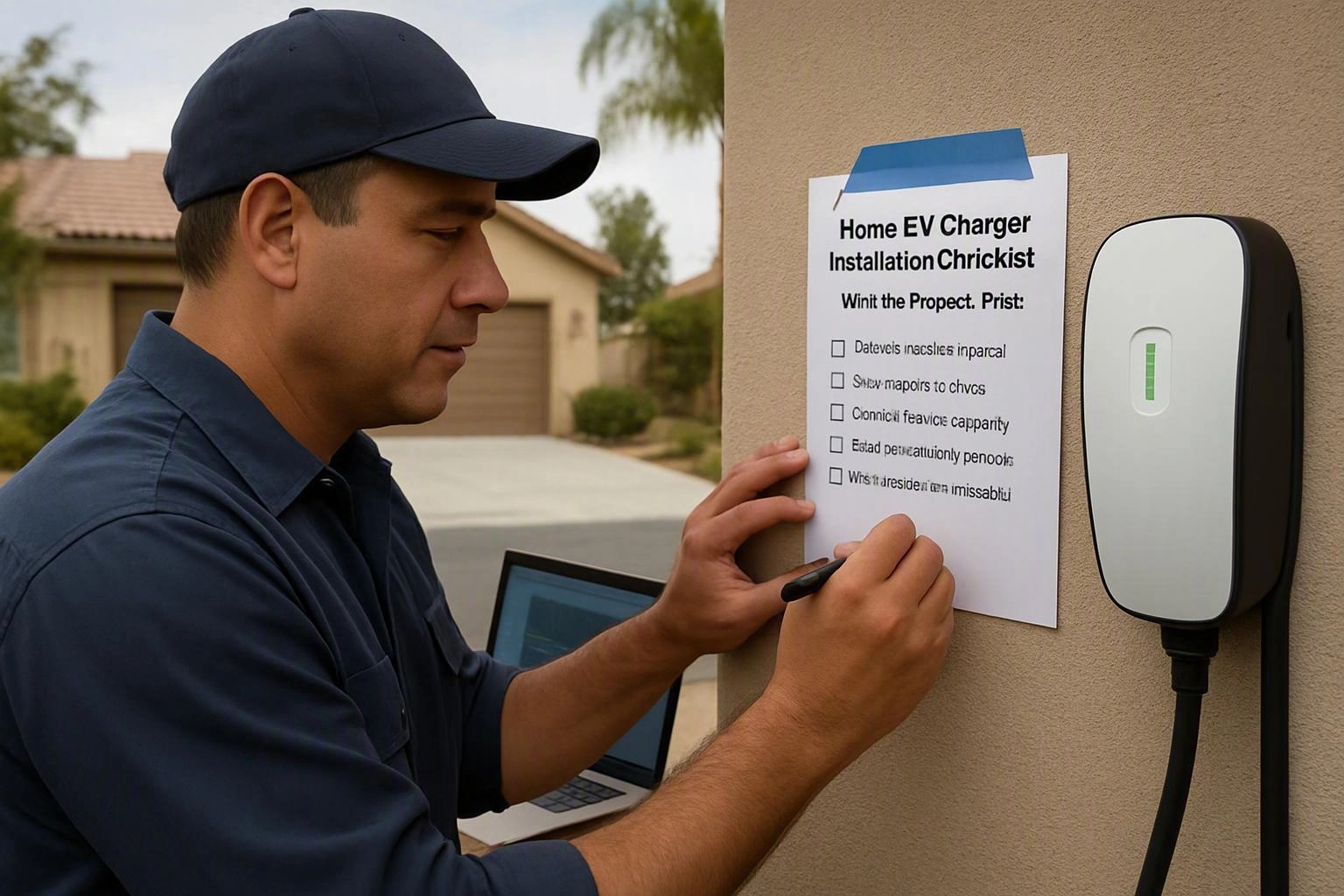
Home EV charger installation requires an early review of the electrical panel, dedicated circuit, mounting location, cable route, and site access. San Bernardino Electrician uses this review to connect your vehicle charging needs with a safe electrical plan.
Check whether the charger will be a Level 2 charger, hardwired charger, or plug-in charger. The charger type affects the circuit design, connection method, mounting approach, and protection required.
We also review the distance between the electrical panel and the charger location. A clear cable route can support a simpler installation plan, while walls, finished spaces, and outdoor areas may require conduit or additional protection.
EV charger installation should include a review of access, mounting surfaces, cable management, and the final testing plan before work begins.
Before Installation: Prepare Your Electrical System and Site
Before installation, the electrical system and site must support the charger requirements and the planned cable route. Our team uses the information below to identify work that belongs in the installation scope.
Our crew handles panel access, circuit planning, grounding checks, and mounting decisions as part of the electrical installation. You can prepare the site by clearing the parking area and keeping the panel and wall accessible.
Which Home Details Should You Share for an Accurate Plan?
The vehicle model, charger specifications, parking position, panel location, wall construction, and access conditions determine the installation plan. These details help us connect the equipment requirements to the home’s electrical layout.
Share the electric vehicle model and the charger documentation when available. The listed voltage, amperage, connection type, and installation instructions help us plan the branch circuit and overcurrent protection.
Tell us where the vehicle will park and where the charger should be mounted. We use the parking location, cable length, wall construction, and cable route to plan cable management and conduit placement.
Also describe the panel location and property access. Our team uses this information to plan inspection access, material routing, outdoor protection, and the installation estimate.
What Should Be Confirmed Before Work Starts?
The installation plan should confirm the charger requirements, circuit path, protective equipment, mounting method, access, and any applicable permission requirements. We review these items with you before installation work starts.
| Item to confirm | Why it matters |
|---|---|
| Charger specifications | The voltage, amperage, connection type, and protection requirements guide circuit planning. |
| Electrical panel | The panel condition and available capacity affect how the charger can be supplied. |
| Circuit breaker | The breaker must match the planned circuit and required overcurrent protection. |
| Conduit and cable route | The route determines how wiring is protected between the panel and charger. |
| Disconnect | The equipment plan may require a suitable means of disconnect based on the site and installation design. |
| Permit requirements | Local permission requirements can affect the work sequence and inspection process. |
| Utility service | The existing service equipment must be considered when reviewing the home’s electrical load. |
We use these confirmations to define the installation scope before materials and work methods are selected. The final plan should also identify the mounting surface, cable protection, and testing steps.
During Installation: Check the Circuit, Mounting, and Cable Route
During installation, we verify the dedicated circuit, wiring path, grounding, charger mounting, and weather protection as the work progresses. Each step connects the electrical panel to the charging equipment safely.
Our crew keeps the cable route organized and checks that the charging connector can reach the vehicle without creating a trip or strain hazard. We also review cable management before moving to final testing.
Why Does the Electrical Panel Matter?
The electrical panel matters because the panel condition, available capacity, and circuit arrangement determine whether the charger can be supplied safely. A load calculation helps show how the new electrical load fits with the home’s existing service equipment.
We inspect the panel for suitable spaces, signs of damage, connection conditions, and the arrangement of existing circuits. Our team also considers whether the service capacity can support the charger without creating an unsafe overload.
Panel condition can change the installation plan when equipment is damaged, crowded, outdated, or not suitable for the planned circuit. We explain the required work and include the related electrical scope in the installation estimate.
After Installation: Test the Charger and Keep the Records
After installation, we test charger operation, circuit protection, grounding, and the charging connection before handing over the system. These checks confirm that the equipment responds correctly and that the installation is ready for home charging.
Final testing is part of our installation process, not a separate assumption. Keep the charger documents, inspection information, and owner instructions together for future service or electrical changes.
What Red Flags Should Stop the Installation Plan?
An overloaded or damaged electrical system, unsafe water exposure, or an obstructed cable route should be resolved before charger installation proceeds. We pause the plan when a site condition could affect charging safety or the integrity of the electrical work.
Our team identifies the condition, explains how it affects the installation, and updates the plan before work continues. Do not open the panel or disturb damaged wiring while preparing the site.
How San Bernardino Electrician Prepares Your EV Charger Installation
San Bernardino Electrician reviews the charger, electrical panel, route, mounting location, and site conditions before explaining the installation plan and estimate. Our team connects the vehicle and parking details to the electrical requirements.
We begin with a site assessment and electrical panel inspection. We then plan the dedicated circuit, cable route, conduit, mounting method, and required protection based on the charger specifications.
Our installation estimate reflects the planned work, including the circuit path, access conditions, equipment placement, and any needed preparation. We complete final testing after the charger is connected and explain the operating checks to the owner.
What Should You Have Ready for the Estimate?
You should have the charger information, vehicle details, panel location, parking area, and access details ready so we can assess the installation scope; Free Estimates Available.
Provide the electric vehicle model and the EV charger specifications if you have them. Include photos of the charger, parking area, electrical panel exterior, and proposed mounting wall when safe and practical.
Tell us whether the charger will be installed indoors or outdoors, where the vehicle parks, and whether walls or finished areas may affect the cable route. We use these details to prepare an installation estimate that reflects the actual site conditions.
San Bernardino Electrician can review the information, inspect the electrical system, and explain the next steps for your home charging plan.
Free Estimates Available
Questions About Preparing for Home EV Charger Installation
Can I prepare the EV charger installation site myself?
Yes, you can clear the parking area, locate the electrical panel, gather charger documents, and keep the proposed wall accessible. San Bernardino Electrician handles the electrical inspection, circuit planning, mounting, connections, and final testing.
Does an EV charger always need a dedicated circuit?
Yes, an EV charger generally requires a dedicated circuit planned for its electrical load and connection method. We confirm the charger specifications, branch circuit design, circuit breaker, wire size, grounding, and required protection before installation.
What information does San Bernardino Electrician need before providing an installation estimate?
San Bernardino Electrician needs the vehicle model, charger specifications, parking location, panel location, proposed charger location, wall construction, cable route, and property access details. We use this information to assess the installation scope and prepare the estimate.
Can an EV charger be installed outdoors?
Yes, an EV charger can be installed outdoors when the equipment, mounting location, wiring method, and enclosure suit the site conditions. We review water exposure, weather protection, conduit, cable management, and access before approving the outdoor installation plan.
What happens if the electrical panel cannot support the charger?
If the electrical panel cannot support the charger, we stop the proposed circuit plan and explain the available electrical work needed to address the capacity or panel condition. The installation estimate is updated to reflect the safe path for the home charging equipment.
Related Resources
Signs You Need Circuit Breaker Repair in San Bernardino, CA
When You Need ItWhen to Call an Electrician for Burning Smells and Hot Outlets in San Bernardino, CA
When You Need ItElectrical Wiring Warning Signs: When San Bernardino Homes Need an Electrician
When You Need ItFlickering Lights: How to Know When You Need an Electrician