Generator Repair or Installation: Which Service Do You Need?
Generator service is compared by the conditions that indicate repair, installation, or electrical troubleshooting. Generator repair addresses faults in an existing system, while generator installation plans and connects a new system. San Bernardino Electrician checks the equipment, electrical conditions, property needs, and backup goals to identify the right service.
Get a Free EstimateGenerator Repair or Installation: Which Service Fits Your Situation?
Generator repair fits an existing generator with a correctable fault, while generator installation fits a property that needs a new standby power system; electrical troubleshooting fits an unclear or broader electrical problem. We compare the equipment condition, electrical connection, backup priorities, maintenance needs, and project scope before recommending a service.
Use the comparison below as a starting point. A site assessment confirms whether the generator system is repairable, compatible with the property, or affected by a separate electrical fault.
| Factor | Generator Repair | Generator Installation | What It Means |
|---|---|---|---|
| Cost drivers | Fault complexity, parts, testing, and access | Generator capacity, site work, wiring, fuel connection, and permits | The work scope determines the quote |
| Service timeline | Usually narrower in scope when the fault is defined | Usually broader because planning and system integration are required | Parts, approvals, and site conditions affect timing |
| Maintenance | Restores existing equipment and supports a maintenance plan | Builds in maintenance access and future service needs | Both options need ongoing care |
| Best for | An existing system with a definable fault | New backup power or full system replacement | The property goal guides the choice |
What Generator Repair Can Address
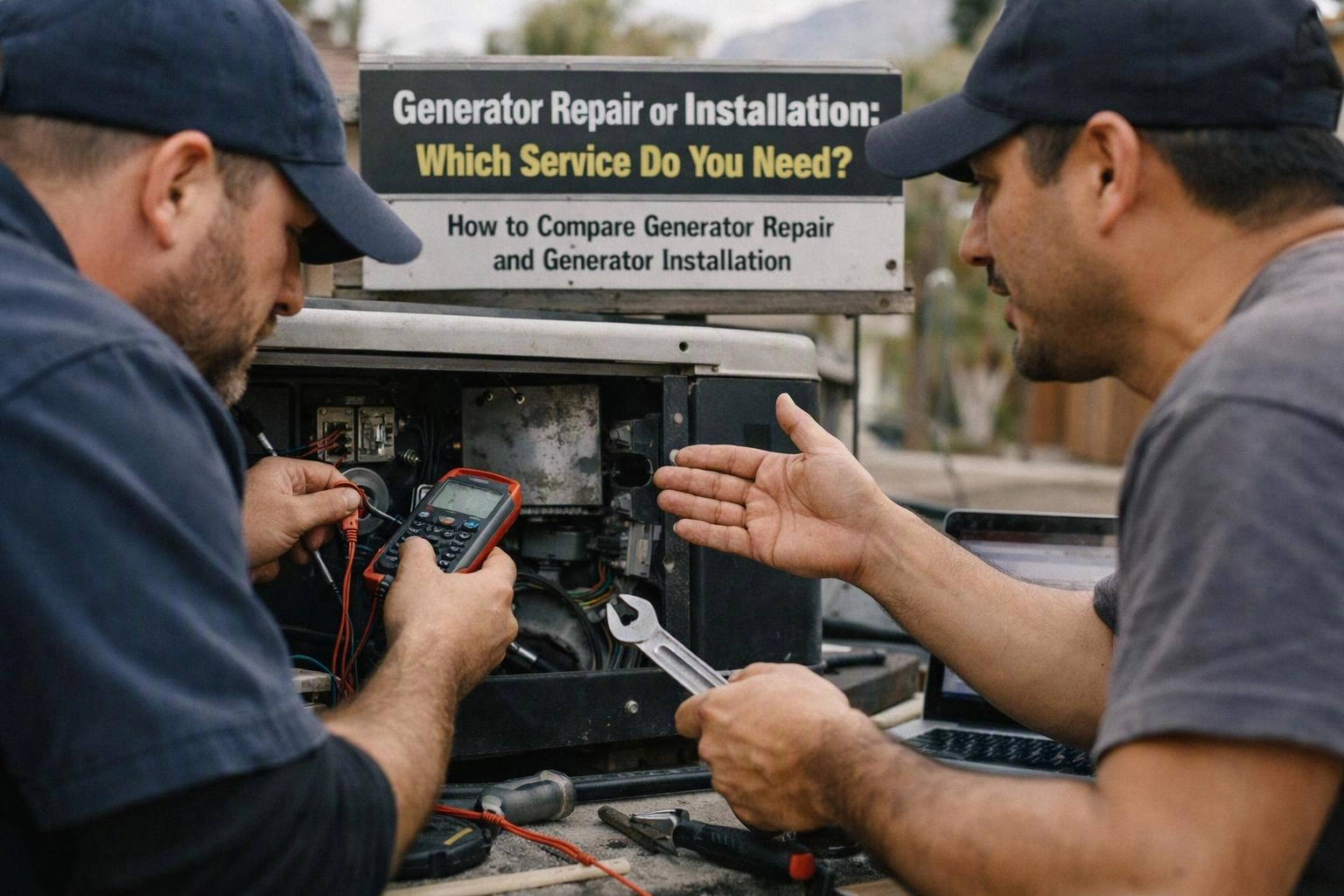
Generator repair addresses a malfunction in an existing generator after the fault has been identified through electrical and equipment checks. We use diagnostic testing to examine the starting system, battery, fuel system, transfer switch, generator wiring, and related controls.
Repair may involve correcting a connection, replacing a failed component, or restoring communication between the generator and the electrical panel. We also check whether the repair supports safe operation and future generator maintenance.
Generator RepairWarning Signs That Point to Generator Repair
Generator repair is the likely starting point when an existing system shows a repeatable operating fault. We inspect the equipment and electrical connections before selecting a repair.
- Failure to start after the start command or an outage
- Unexpected shutdown during operation
- Irregular output or unstable power
- Error messages on the control panel
- Unusual sounds, vibration, or burning odors
- Visible wiring damage or loose connections
- Transfer switch failure during a power changeover
Advantages of Choosing Generator Repair
Generator repair keeps the decision focused on restoring an existing system when the equipment condition supports that approach. We diagnose the fault before replacing parts so the work addresses the cause.
Best for: an existing generator with a definable and repairable fault.
Best for Existing Equipment With a Definable Fault
Generator repair is best for existing equipment whose condition and repairability support continued use. We consider the fault, the equipment condition, system compatibility, and the property’s backup needs before recommending repair.
When repeated faults point to a poor fit or major system limitations, we explain whether installation planning would better serve the property.
When Generator Installation Is the Better Fit
Generator installation fits a new backup-power project or a system that no longer suits the property's electrical load, placement, or operating requirements. We plan the standby generator, transfer switch, electrical panel connection, fuel source, generator placement, permits, and code compliance as one system.
Installation planning starts with load requirements and backup priorities. We then review site conditions, electrical connection paths, fuel access, and maintenance access before preparing the installation plan.
Advantages of Choosing Generator Installation
Generator installation creates a coordinated backup power system when repair cannot meet the property’s needs. We match the system design to the intended loads and the available installation location.
Best for: new standby power, a property expansion, or a full system replacement.
Best for New Backup Power or a Full System Replacement
Generator installation is best for new construction, a property expansion, or a system replacement that requires a broader design. We coordinate the generator, fuel connection, transfer equipment, wiring, permits, and code compliance.
A new installation can also address placement, access, load changes, and system compatibility that an older generator cannot support.
What to Check Before Choosing Repair or Installation
The choice between repair and installation depends on the equipment, property, and backup goals. We use the following checks during a repair assessment or site assessment.
How Electrical Troubleshooting Helps When the Problem Is Unclear
Electrical troubleshooting identifies whether the failure comes from the generator, transfer equipment, wiring, panel, or another part of the electrical system. We trace the generator circuit through the electrical panel, transfer switch, control wiring, and grounding connections.
Voltage testing and fault isolation help separate an equipment problem from an electrical connection problem. That result guides a repair recommendation or shows when installation planning is more appropriate.
What Changes the Cost of Repair or Installation?
Generator repair and installation costs depend on the equipment, fault or project scope, electrical modifications, site conditions, and required materials; San Bernardino Electrician provides an exact quote after assessing the work. We explain the quote based on the actual conditions found at the property.
Repair cost drivers include fault complexity, diagnostic testing, parts, access, wiring repairs, and transfer switch work. Installation cost drivers include generator capacity, wiring distance, fuel connection, site preparation, transfer equipment, electrical panel changes, and permit requirements.
To obtain an exact quote, provide the generator details and arrange an assessment so we can review the equipment, electrical system, property needs, and requested backup loads.
How to Prepare for Generator Service
Preparing generator information helps us begin diagnostics or installation planning with a clearer view of the system. Keep the equipment accessible, and do not open energized equipment or attempt unsafe fuel or wiring work.
Electrical Maintenance Before Severe Weather
Electrical maintenance before severe weather checks the generator, transfer equipment, wiring, and power connections so known faults can be addressed before an outage. We review generator readiness, battery condition, the fuel system, grounding, and visible wiring conditions.
Our team can also check whether the transfer switch responds correctly and whether the generator circuit connects safely to the electrical panel. This power outage preparation helps identify service needs before the system is required.
How San Bernardino Electrician Decides Which Generator Service You Need
San Bernardino Electrician reviews the generator symptoms, electrical system, property requirements, and requested backup loads before recommending repair, installation, or troubleshooting. We combine a site assessment with generator diagnostics and electrical troubleshooting to isolate the work scope.
Our recommendation may include a repair assessment, a focused generator wiring repair, or an installation plan with load calculation, transfer equipment, permits, and maintenance access. Free Estimates Available for the work we assess.
Contact San Bernardino Electrician to discuss the generator system and request an assessment.
Questions About Generator Repair and Installation
Can a generator be repaired if it will not start?
Yes, San Bernardino Electrician can assess a generator that will not start and identify whether the cause involves the battery, fuel system, controls, wiring, or another component. We complete diagnostic testing before recommending repair.
What should be checked before installing a standby generator?
A standby generator installation should be checked against load requirements, backup priorities, fuel supply, placement, transfer equipment, electrical panel capacity, permits, code compliance, and maintenance access. We review these conditions during installation planning.
Does a generator installation include a transfer switch?
A generator installation may include a transfer switch when the project requires automatic or controlled changeover to backup power. We confirm the transfer equipment, electrical panel connection, wiring, and system requirements in the installation plan.
When should generator troubleshooting include the electrical panel?
Generator troubleshooting should include the electrical panel when the generator runs but backup circuits do not receive power, the transfer switch does not change over, or the fault may involve panel connections. We trace the circuit to isolate the failure.
What information should I provide before requesting generator service?
Provide the generator model information, service history, error messages, fuel details, symptom records, and safe access to the electrical panel and transfer switch. We use that information to prepare for diagnostics or installation planning.