Emergency Electrician Checklist: What to Do Before Help Arrives
Emergency electrician checklist steps include protecting people, avoiding contact with damaged electrical equipment, switching off power only when safe, documenting warning signs, and sharing clear details with San Bernardino Electrician so our team can prepare for the repair.
Get a Free EstimateWhat Should You Do First When an Electrical Emergency Starts?
Electrical emergency response starts with protecting people from the hazard and leaving the area when smoke, fire, sparking, or exposed wiring creates immediate danger.
Move occupants away from the affected room or equipment. Do not touch damaged equipment, energized wiring, or water near an electrical source.
Call emergency services when there is an electrical fire, heavy smoke, an electric shock, or a danger to life. After people are safe, contact San Bernardino Electrician and describe what happened so our team can prepare for an emergency electrical repair.
Before Help Arrives: Protect People and the Property
Occupant safety comes before protecting equipment or collecting details. Use these steps only when they can be completed without entering a dangerous area.
Utility service may require separate attention when damage involves the service connection or equipment outside the property. Share that concern with emergency services or the utility provider while keeping everyone clear of the hazard.
When Is It Safe to Switch Off the Power?
Power isolation is safe only when the electrical panel and the route to it are dry, accessible, and free from active fire, smoke, arcing, or damaged equipment.
You may use the main electrical panel, circuit breaker, fuse box, or service disconnect when reaching it does not expose you to an energized circuit. Do not touch a wet panel, stand in water, or pass through smoke to reach the disconnect.
Do not reset a repeatedly tripping breaker. A tripped circuit breaker can point to an electrical fault, damaged wiring, overload, or faulty equipment. We test the affected circuit and isolate the cause before restoring power.
During the Wait: What Information Should You Gather?
Document the symptoms from a safe location so our team can focus on the affected circuit and connected equipment. Do not handle the damaged item to gather information.
Clear observations help us plan electrical troubleshooting without asking you to perform unsafe tests. Photos can help when taken from a safe location, but personal safety comes first.
Which Electrical Warning Signs Need Immediate Caution?
These warning signs call for caution because they can indicate energized damage, overheating, or an electrical fault.
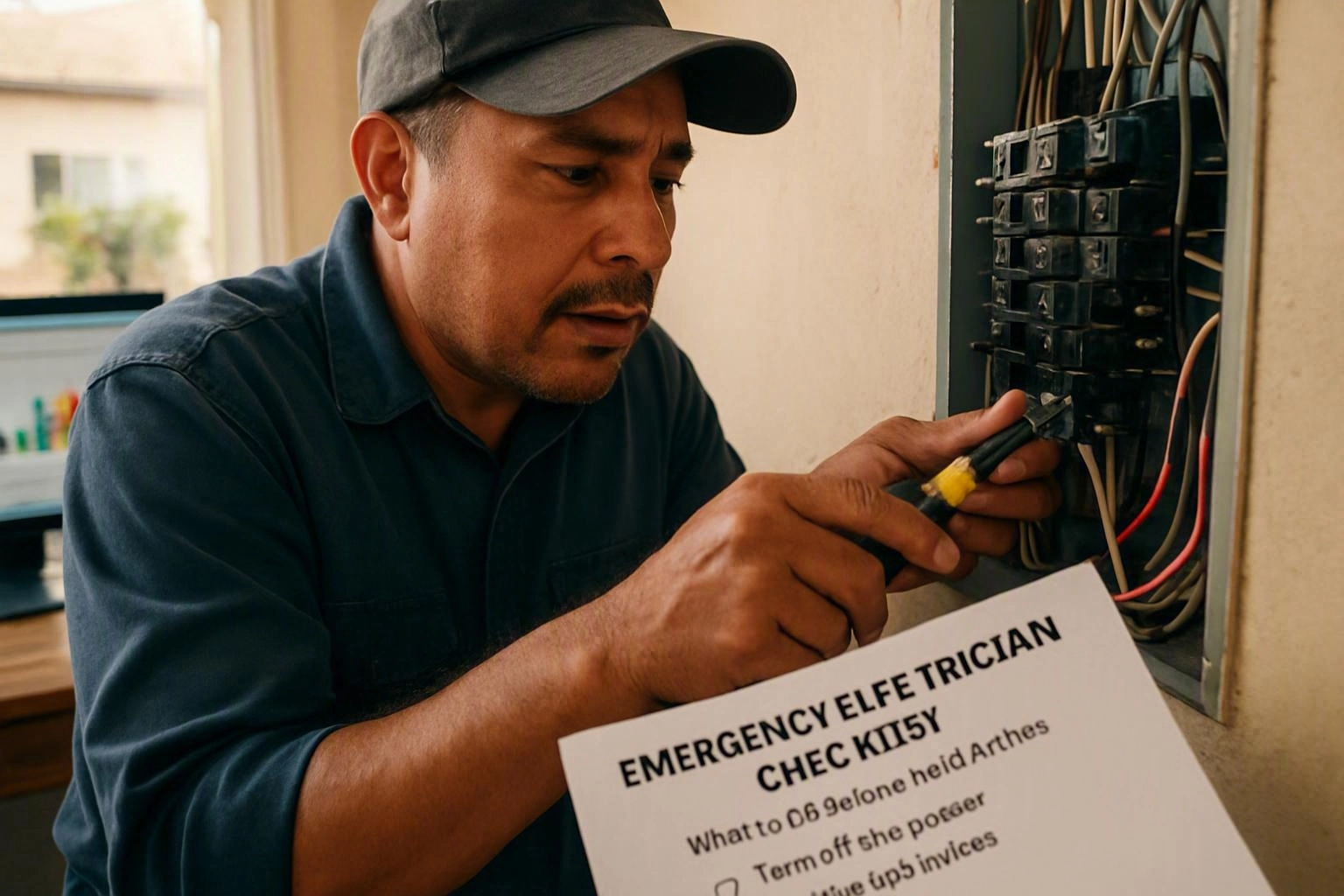
Leave the area when these signs are active or worsening. We use the reported warning signs to guide safe fault isolation after the hazard is controlled.
After the Immediate Danger Passes: Preserve the Evidence
Preserving damaged parts and notes helps connect the visible problem to the underlying circuit condition. Keep the area untouched unless emergency services direct you to clear it.
Our team compares these observations with test results during the electrical inspection. That process helps distinguish a damaged component from a broader circuit problem.
How We Diagnose the Electrical Problem After Arrival
San Bernardino Electrician diagnoses the reported symptoms, checks the affected circuit and connected components, identifies the source of the hazard, and explains the repair before work proceeds.
Our electrical troubleshooting may include checking the circuit breaker, fuse box, outlets, light switches, appliance connections, and accessible wiring. We use fault isolation to determine whether the issue involves one device or a wider circuit condition.
Our services can include emergency electrical repair, circuit breaker repair, Fuse Box Repair, outlet repair, and light switch repair. We explain the needed work and provide Free Estimates Available when assessing the repair.
What Should You Tell Us When Requesting Emergency Electrical Help?
Emergency electrical help is easier to prepare when you describe the hazard, affected area, power status, visible damage, and steps already taken; we provide Free Estimates Available when assessing the required work.
Tell us whether there is smoke, sparking, exposed wiring, water exposure, an electric shock, or a burning odor. Include the circuit location, the condition of the circuit breaker or fuse, and whether power is on or isolated.
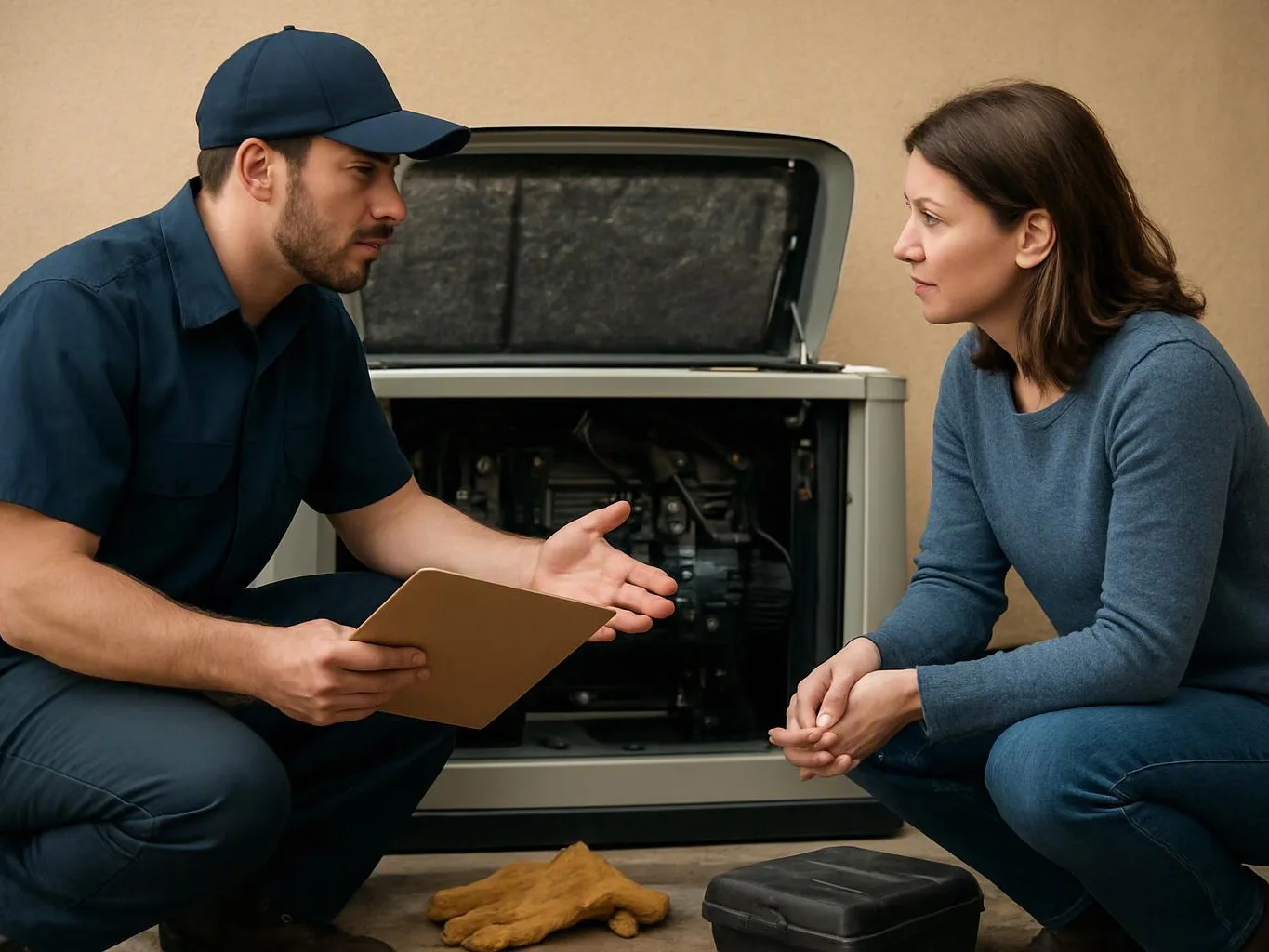
Explain how we can obtain property access without sending anyone into an unsafe area. Our team uses your details to plan safe access, bring the right testing approach, and discuss the repair before work begins.
Share repair documentation, photos taken from a safe location, and information about appliances that were operating when the fault began. Do not reset equipment or touch damaged parts while waiting.
Questions About Emergency Electrical Safety
Should I reset a circuit breaker before an emergency electrician arrives?
No, do not reset a repeatedly tripping breaker before San Bernardino Electrician assesses the circuit and connected equipment.
What should I do if an outlet is sparking?
Leave the area, keep people away, and avoid touching the sparking outlet or nearby equipment. Call emergency services if there is fire, smoke, injury, or immediate danger.
Can I touch a wet electrical panel?
No, do not touch a wet electrical panel or enter a wet area near energized equipment. Keep people away and wait for safe assessment.
Should I unplug an appliance during an electrical emergency?
No, do not unplug an appliance when the cord, outlet, floor, or equipment is wet, damaged, hot, smoking, or sparking. Keep clear and report the appliance to our team.
What information should I give the emergency electrician?
Give us the affected location, power status, visible damage, warning signs, circuit breaker or fuse condition, water exposure, and steps already taken.
Contact San Bernardino Electrician with the safety details and observations you gathered. We can discuss the next safe step, arrange the assessment, and explain the repair required.
Related Resources
Signs You Need Circuit Breaker Repair in San Bernardino, CA
When You Need ItWhen to Call an Electrician for Burning Smells and Hot Outlets in San Bernardino, CA
When You Need ItElectrical Wiring Warning Signs: When San Bernardino Homes Need an Electrician
When You Need ItFlickering Lights: How to Know When You Need an Electrician