Safe Electrical Troubleshooting Before Calling an Electrician
Safe electrical troubleshooting starts with switching off affected equipment, checking the breaker and resettable outlets, and observing symptoms without opening electrical parts. San Bernardino Electrician handles dangerous, repeated, or unresolved faults through Electrical Troubleshooting, Circuit Breaker Repair, Outlet Repair, Wiring Repair, and Emergency Electrical Repair.
Get a Free EstimateWhat You Can Safely Check Before Calling for Help
Electrical troubleshooting means observing symptoms and checking accessible controls without removing covers, exposing wiring, or touching damaged components. Safe homeowner checks can help identify whether one appliance, outlet, or circuit is affected.
Use these steps only when there is no smoke, burning smell, sparking, shock, or visible damage.
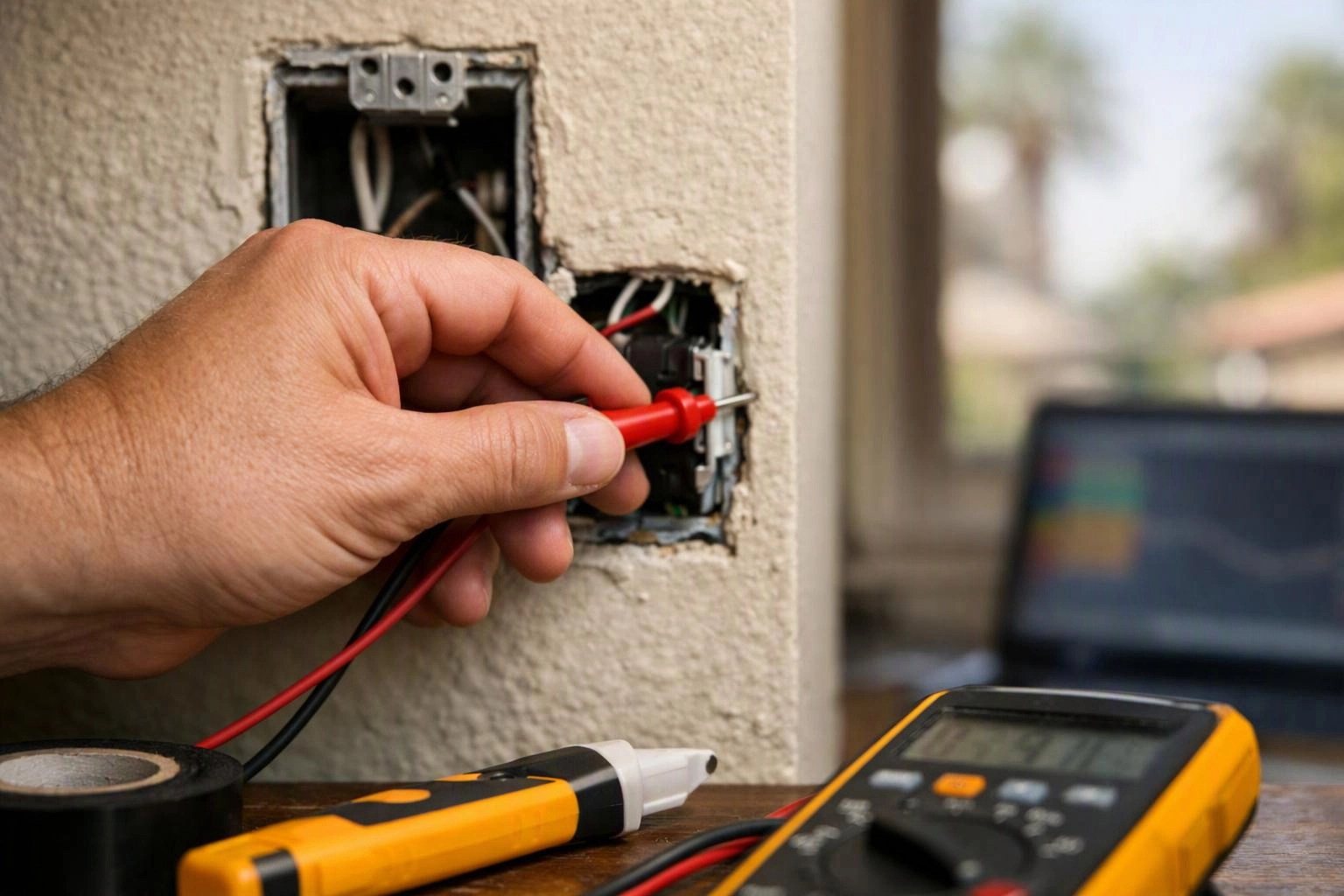
Do not remove an electrical cover, pull an outlet from the wall, or test exposed wiring. Our team handles electrical fault finding when safe checks do not identify the cause.
What Symptoms Mean You Should Stop Troubleshooting
Electrical symptoms such as smoke, burning odors, sparks, shocks, or repeated trips require you to stop using the affected circuit and contact San Bernardino Electrician. These signs can involve overheating, damaged wiring, or failed circuit protection.
Stop troubleshooting and keep away from the affected area when you notice any of these signs:
Move away from visible danger and avoid touching damaged equipment. We provide Emergency Electrical Repair when a fault creates immediate heat, smoke, sparks, or shock risk.
Common Causes of Flickering Lights and Dead Outlets
Flickering lights and dead outlets can come from a protective device, a connection problem, or a failed electrical component. We trace the affected circuit to separate a simple reset issue from a condition that needs repair.
Flickering that continues after a safe reset may indicate wiring trouble or a circuit fault. Our crew can perform flickering light diagnosis and outlet troubleshooting without asking you to open electrical parts.
Why One Area of a Home May Lose Power
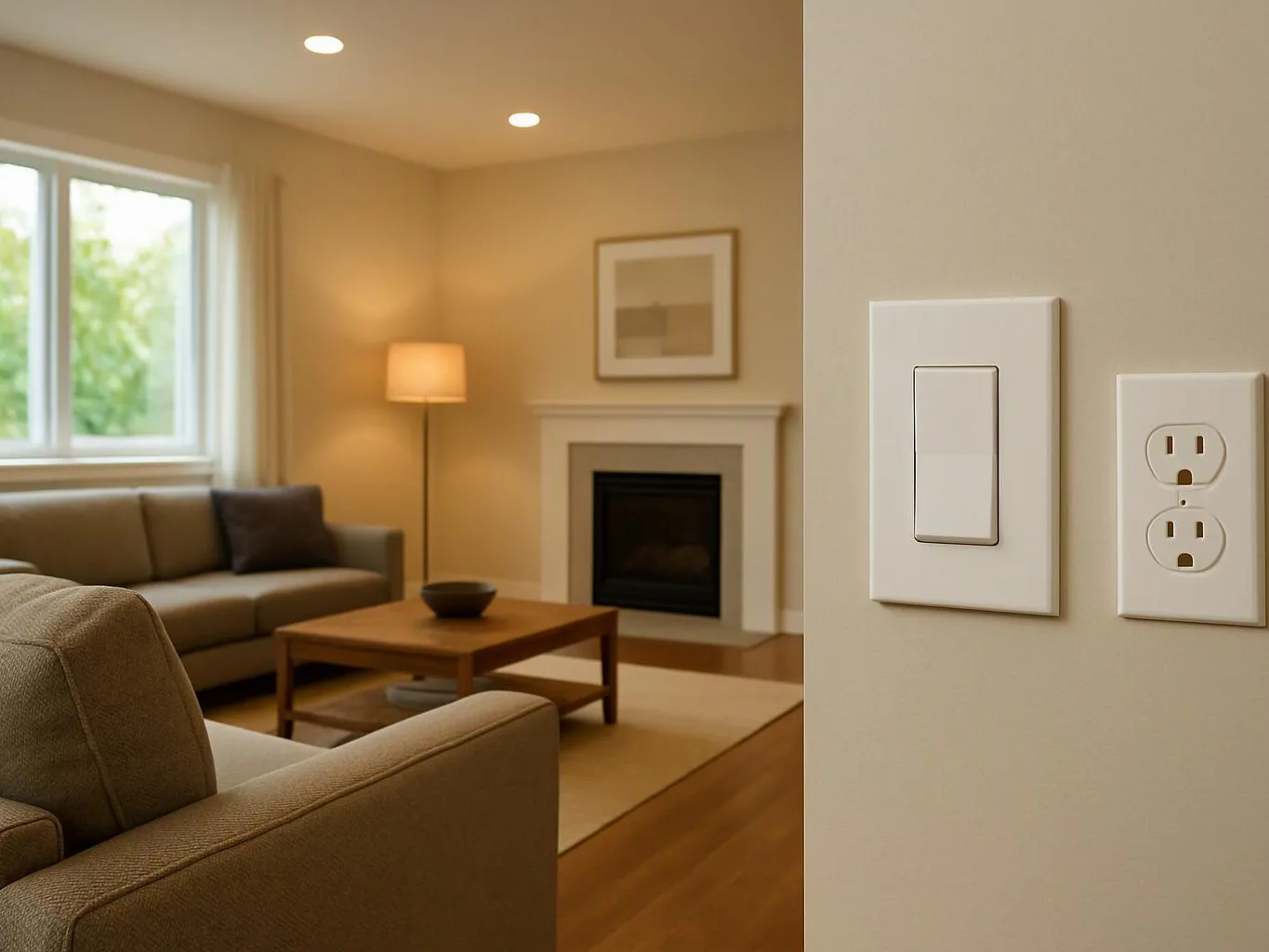
Partial power loss usually points to a circuit-level issue, a protective device that has opened, or a fault affecting outlets and fixtures in the same branch circuit. A branch circuit carries power from the electrical panel to connected outlets, switches, and fixtures.
GFCI protection can open when it detects a fault, and that action may interrupt downstream outlets. A circuit breaker can also open because of excess electrical load or a detected fault. We trace the outlet circuit and related devices to identify whether the problem is local or affects the wider branch circuit.
Check accessible reset controls only when the area is dry and there are no warning signs. If resetting does not restore power, or if several rooms lose power, we perform partial power loss diagnosis and inspect the electrical panel safely.
Simple Prevention Steps for Electrical Problems
Basic electrical maintenance reduces strain on outlets, cords, and circuit protection. These habits also make it easier to notice changes before a small issue becomes a dangerous fault.
Prevention does not correct hidden wiring faults. We inspect unusual heat, repeated interruptions, and changes in outlet or switch performance.
When San Bernardino Electrician Should Inspect the Problem
San Bernardino Electrician should inspect electrical problems when a breaker keeps tripping, an outlet stays dead, wiring shows damage, or the fault creates heat, smoke, odor, sparks, or shock risk.
Our Electrical Troubleshooting service is appropriate when safe reset checks do not restore power or when symptoms return. We provide Circuit Breaker Repair for protective devices that trip repeatedly, Outlet Repair for failed or damaged receptacles, and Wiring Repair when connections or conductors are involved.
Do not keep resetting a repeated breaker trip or continue using a dead outlet with scorch marks. We provide Emergency Electrical Repair when the condition may create immediate danger.
How We Check an Electrical Fault and Explain the Repair
We trace the affected circuit, test accessible components, identify the fault, explain the repair scope, and provide Free Estimates Available before proceeding.
Our electrical inspection begins with the reported symptoms and the condition of the affected area. We then use circuit testing and voltage testing as appropriate to narrow the fault without relying on guesswork.
Fault isolation helps us distinguish a failed device from a branch circuit or wiring problem. We explain the repair recommendation, the reason for the work, and what the repair scope covers before we proceed.
Cost depends on the affected component, access, circuit condition, and repair scope. Contact us for an exact quote based on the fault we identify.
What Should You Do About a Burning Electrical Smell?
A burning electrical smell means you should stop using the affected equipment, move away from visible danger, and contact San Bernardino Electrician for inspection.
A burning odor may come from overheated wiring, an electrical outlet, a light fixture, or equipment connected to the circuit. Turn off the affected circuit only when you can do so safely and without approaching smoke, sparks, heat, or exposed parts.
Do not touch a hot outlet, remove a panel cover, or continue resetting the circuit breaker. Our team checks the source, isolates the fault, and completes emergency electrical repair when the condition requires urgent attention.
Questions About Safe Electrical Troubleshooting
Can a tripped GFCI outlet make other outlets stop working?
Yes, a tripped GFCI outlet can stop power at downstream outlets on the same circuit. San Bernardino Electrician checks the protection path when resetting the accessible GFCI does not restore power.
Why does a circuit breaker trip again after being reset?
A circuit breaker that trips again may be responding to an overloaded circuit, a short circuit, or another electrical fault. Stop resetting it and let our team inspect the circuit.
Is a flickering light always an electrical wiring problem?
No, a flickering light can involve a loose connection, overloaded circuit, faulty fixture, or another component. We test the affected light and circuit to identify the cause.
What should you do if an outlet feels warm?
Stop using a warm outlet, unplug equipment only when it is safe, and arrange an inspection. Heat can indicate an overloaded circuit, loose connection, or failing outlet.
Can you use an outlet that has scorch marks?
No, an outlet with scorch marks should remain unused until we inspect it and the connected wiring. Scorch marks can show overheating or a damaged connection.
Get Safe Help With an Electrical Fault
San Bernardino Electrician can inspect dangerous, repeated, or unresolved electrical problems and explain the repair needed. Contact us for Electrical Troubleshooting, Circuit Breaker Repair, Outlet Repair, Wiring Repair, or Emergency Electrical Repair.
Related Resources
Signs You Need Circuit Breaker Repair in San Bernardino, CA
When You Need ItWhen to Call an Electrician for Burning Smells and Hot Outlets in San Bernardino, CA
When You Need ItElectrical Wiring Warning Signs: When San Bernardino Homes Need an Electrician
When You Need ItFlickering Lights: How to Know When You Need an Electrician