What to Check Before Calling for Landscape Lighting Repair
A landscape lighting repair checklist helps you find common problems first. Check the breaker, GFCI outlet, timer, and transformer display. Don't open energized equipment. Look at visible cables, connectors, bulbs, and water damage. Test the system during normal operation. Stop if you see exposed wires, burning smells, repeated trips, or excess heat. Write down which lights fail. Note what you checked. This helps an electrician find the problem faster. It also helps them choose repair, replacement, or rewiring. SanBernardino-Electrician.com uses these details to plan safe outdoor lighting service.
Get a Free EstimateWhy a Landscape Lighting Checklist Helps?
Landscape lighting repair checklists help you sort simple control problems from electrical faults. They cover power, controls, transformer output, wiring, connectors, and fixtures. They also help limit unsafe testing.
Low-voltage lighting can serve paths, gardens, driveways, steps, or security areas. A dark area doesn't always mean every fixture failed. A tripped GFCI receptacle may cause the problem, so may a timer, loose wire splice, or voltage drop.
Write down what works and what doesn't. Note if one light fails or a full zone fails. Record if lights flicker after rain. It may also shorten the inspection.
Before You Inspect: Start with Safety and Power
Outdoor electrical safety comes first. Turn off power when needed. Keep your hands and tools dry. Don't open powered parts. Check the breaker, GFCI receptacle, transformer controls, and timer from outside. Then record what the system does.
These checks only involve looking. They don't replace voltage testing. If water entered a box, connector, or transformer, turn off the system. Then arrange professional help.
Use This Before, During, and After Repair Checklist
A full check has three stages. Check power and controls first. Compare working and failed fixtures during testing. Restore safe settings and record problems afterward.
Before testing
- Confirm the power supply by checking the breaker and GFCI. Don't open equipment.
- Record the timer settings, photocell condition, and transformer light.
- Map the lighting zones. Include paths, garden beds, driveways, and security fixtures.
- Photograph the transformer label, visible cables, connectors, and damaged areas.
- Wait for the normal operating time. Then compare the system under usual conditions.
During diagnosis
- Compare a working fixture with a failed one. Check the bulb, socket, aim, and visible damage.
- Look at easy-to-reach cable connections. Check for rust, looseness, cuts, or water.
- Look for buried cable damage near recent digging, planting, edging, or paving.
- Note if the failure starts at one point. Check if later lights also fail.
- Stop before live voltage tests. Leave hidden wiring to trained professionals.
After testing
- Restore safe settings on the timer and transformer. Only change controls made for users.
- Close covers. Protect connections from rain, sprinklers, soil, and standing water.
- Don't bury a temporary repair. Don't leave a cable splice exposed.
- Run the system through its normal cycle. Check if the same lights fail again.
- Record the date, weather, symptoms, photos, and steps taken.
Simple visual checks often take 15 to 30 minutes. Large systems with many zones may take longer. This time doesn't include voltage tests or digging.
How to Check the Transformer, Timer, and Wiring?
The low-voltage transformer, timer, photocell, and cable connections control the lights. Check that the transformer has power and an active schedule. Look at easy-to-reach wire splices and cables. Check for rust, loose parts, cuts, or water. Don't open powered equipment. Don't take live readings without proper training.
A transformer may look active while carrying too much load. The load means the number of fixtures it powers. Many added lights can overload it. Long cable runs can also cause voltage drop. Far lights may look dim or fail first.
Check visible wire splices and waterproof connectors. Look for cracked seals, green rust, loose wires, or soil contact. A dry-looking connector may still hold water. Don't pull, cut, or uncover buried cable without knowing its route. Other utilities may be close by.
In a typical low-voltage system, the control turns on the transformer. The transformer then powers the fixture circuit. If the timer works but all zones stay dark, an electrician can test voltage. This can show if the transformer or cable has failed. Don't work inside powered equipment.
Match the Symptom to the Likely Problem
Landscape lighting symptoms can point to different repair areas. A full outage may involve the breaker, GFCI, timer, transformer, or main cable. One dark light may have a bad bulb, socket, connector, or local cable. Flickering may come from rust, loose wires, water, or unstable voltage.
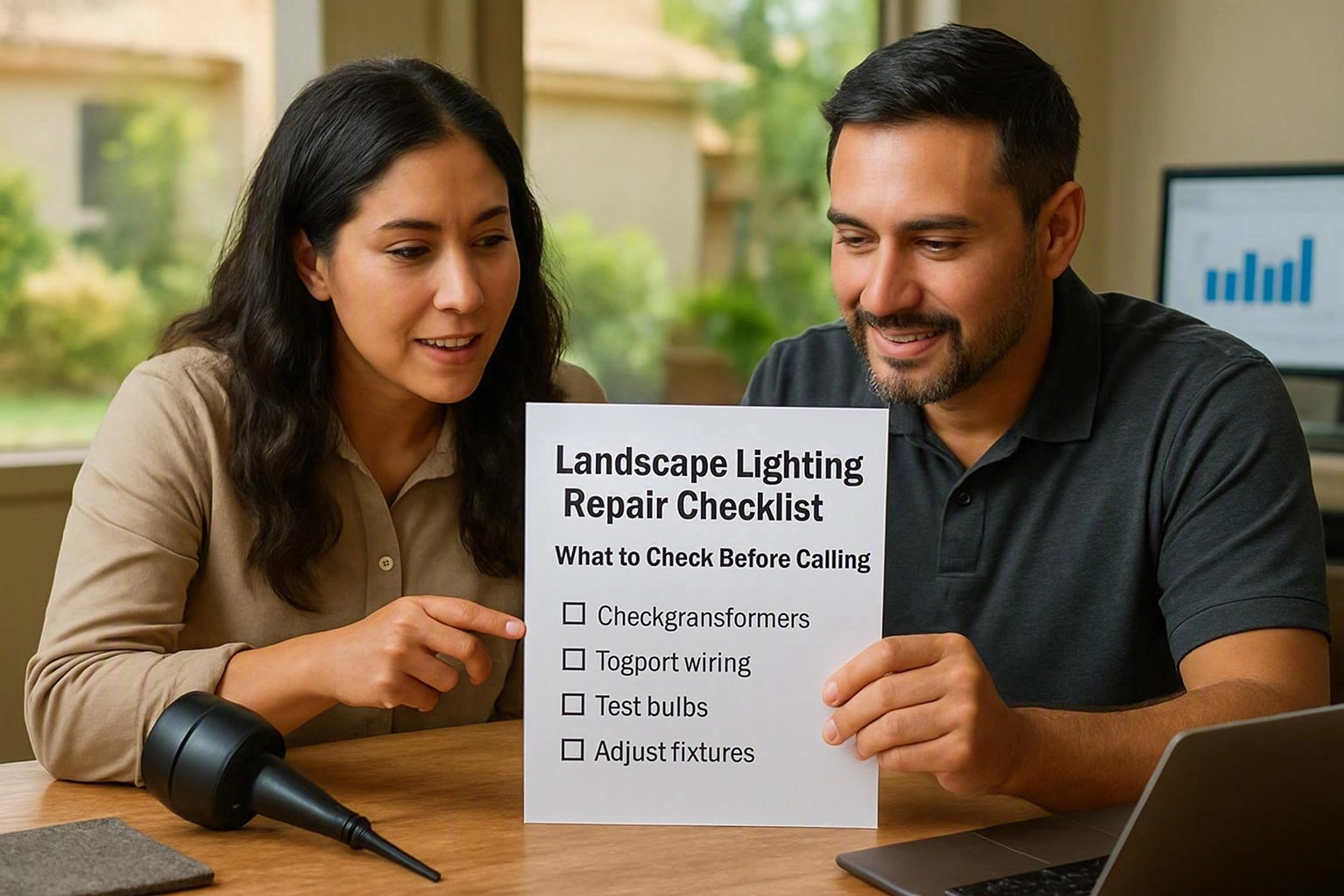
| Symptom | Likely areas to inspect | Safe next step |
|---|---|---|
| Complete lighting failure | Breaker, GFCI receptacle, timer, transformer, or main cable | Check controls from outside. Stop if protection trips again. |
| Partial lighting failure | One zone, voltage drop, buried cable, or a failed connection | Find the first failed fixture. Photograph visible connections. |
| One dark fixture | Burned-out lamp, socket, fixture, connector, or local cable | Check the lamp only if safe replacement is allowed. Turn off power first. |
| Flickering light | Loose connection, corrosion, water intrusion, or unstable voltage | Stop if you see heat, sparks, exposed wires, or a burning smell. |
| Dim lights at the end of a run | Voltage drop, transformer loading, cable size, or damaged cable | Arrange electrical testing. Don't change connections at random. |
A burned-out bulb usually affects one light. A rusty connector can affect several lights after it. The failure pattern helps narrow the problem. It also avoids needless work on buried wiring.
Red Flags That Mean You Should Stop Troubleshooting
Electrical red flags mean you should stop. Call qualified help. Exposed wires, burning smells, melted insulation, hot transformers, repeated trips, sparks, and wet connections can create shock or fire risks.
Keep people away from the area. Don't bypass GFCI protection. Don't wrap damaged wires as a final repair. Don't keep resetting a safety device.
What to Record Before Calling an Electrician?
Record the failure pattern before calling an electrician. Note which fixtures are out. Record if one zone or the whole system fails. Write when the problem began. Note if rain or yard work came first. Photos can help with the first diagnosis.
Include the lighting zone. It may be a path, garden bed, driveway, or security-lighting circuit. Note if lights are dark, dim, or flickering. Record changes after rain, watering, or a timer cycle.
Add any known service history. Include the install date, bulb changes, transformer work, cable repairs, landscaping, or system additions. Don't remove covers for more details. A safe photo from outside is more useful.
For a Lighting Repair request, share your photos and notes before the visit. Explain heat, smoke, or repeated trips clearly. A 24 Hour Electrician may help when an active hazard can't wait. People seeking Landscape Lighting Repair in San Bernardino should share these same details.
When Landscape Lighting Repair Requires Professional Help?
Professional landscape lighting repair is needed for buried cables, transformer changes, hidden splices, repeated trips, or advanced electrical tests. An electrician can find the failed circuit safely. They can test voltage and repair damaged connections. They can also advise on repair or replacement.
Digging, roots, animals, water, and shifting soil can damage buried cable. Finding the fault may need approved tests and careful digging.
Get professional help if the transformer is overloaded, hot, damaged, or unstable. A technician can check its size, cable length, fixture load, connections, and voltage drop. This is safer than replacing parts by guesswork.
Our team handles outdoor lighting repair as part of electrical system care. We can explain your repair choices. These may include a local connection repair, low-voltage transformer repair, landscape lighting cable repair, corroded connector replacement, or rewiring. Qualified professionals should handle powered equipment, hidden wiring, and safety devices.
Use this checklist to prepare safely. Turn off the system when needed. Keep notes about the fault. Share them so the service visit starts with useful facts.
Questions About 24 Hour Electrician
Why Are My Landscape Lights Not Working?
Check the breaker, GFCI outlet, timer, photocell, and transformer from outside. If all lights are dark, the fault may involve power, controls, the transformer, or the main cable. Stop if the breaker or GFCI trips again. Also stop for heat, smoke, water damage, or exposed wires.
How Do I Troubleshoot Low-Voltage Landscape Lighting?
Start with safe visual checks. Confirm GFCI protection and review the timer. Check the transformer display. Compare working and failed fixtures. Look for damaged cables, loose splices, rust, and wet connectors.
Why Is Only One Landscape Light Not Working?
One dark fixture often has a burned-out bulb, bad socket, loose wire, rusty connector, or local cable fault. If the fixture allows safe lamp replacement, turn off power first. Follow its instructions. If a new lamp doesn't help, an electrician can check the connection and cable.
How Do I Know if My Landscape Lighting Transformer Is Bad?
Signs may include no display or output after power checks, repeated shutdowns, excess heat, damaged parts, or unstable lights. Don't open the transformer. Don't take live readings without training. An electrician can test it and check its load, cables, and voltage drop.
When Should I Call an Electrician for Outdoor Lighting Repair?
Call an electrician for exposed wires, burning smells, overheating, repeated breaker or GFCI trips, buried cable faults, hidden splices, transformer replacement, wet wiring, or electrical tests. Professional service also helps when visual checks can't explain a failed zone or system.
Related Resources
When to Call an Electrician for Burning Smells and Hot Outlets in San Bernardino, CA
when to call an electrician for burning smell from outlet
When You Need ItElectrical Wiring Warning Signs: When San Bernardino Homes Need an Electrician
warning signs electrical wiring needs to be replaced
When You Need ItSigns Your Outdoor and Landscape Lighting Has Electrical Damage in San Bernardino, CA
signs outdoor lighting wiring is bad
When You Need ItFlickering Lights: How to Know When You Need an Electrician
how do I know if flickering lights are an electrical problem