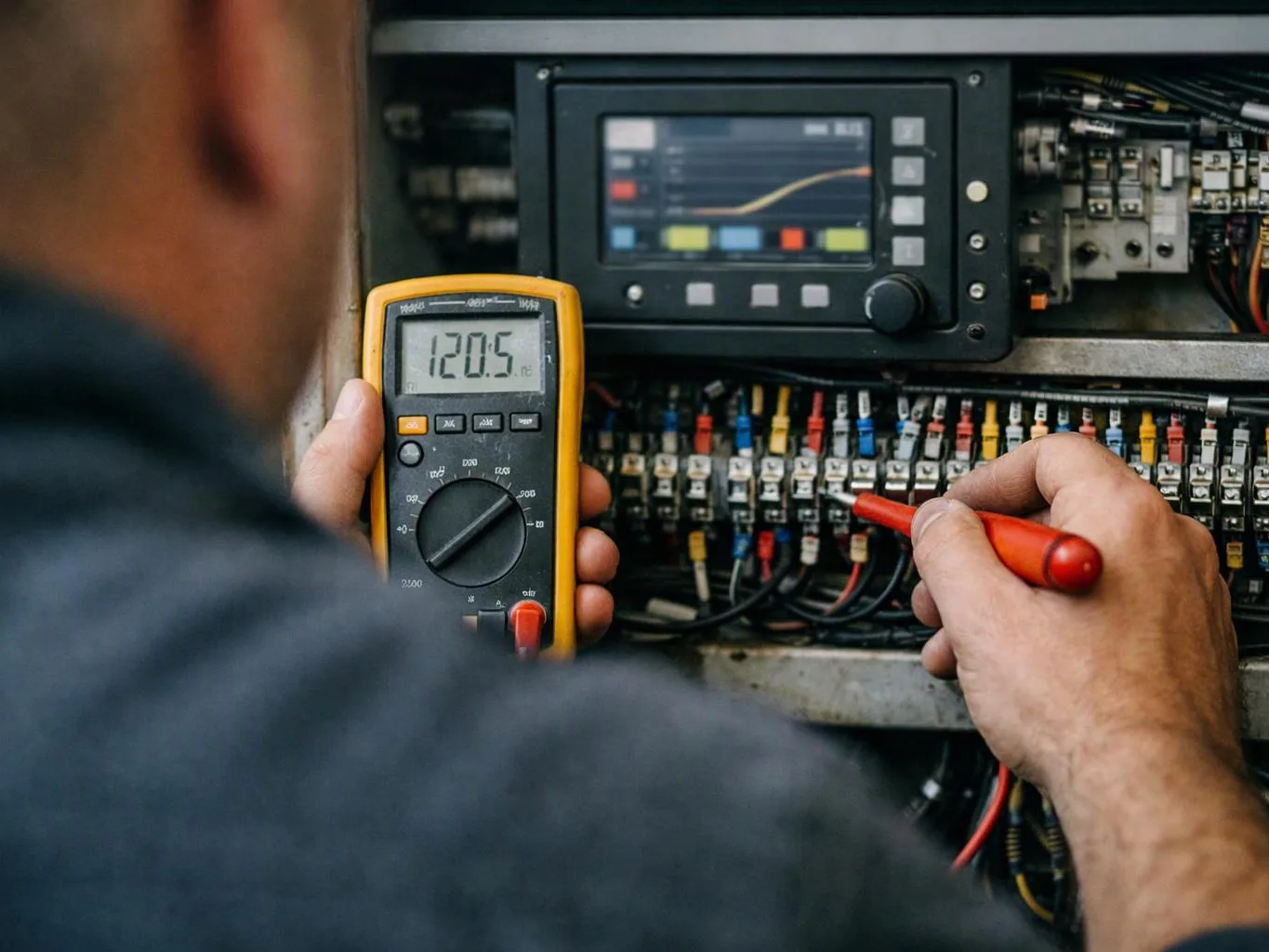
Landscape Lighting Repair Mistakes That Cause Repeat Outages
Landscape lighting repair mistakes that cause repeat outages include replacing parts without testing, leaving damaged wiring, ignoring water intrusion, and skipping a full system check. San Bernardino Electrician traces the fault, corrects the underlying electrical issue, and verifies the repaired lighting circuit.
Get a Free EstimateWhy Landscape Lighting Repairs Fail Again
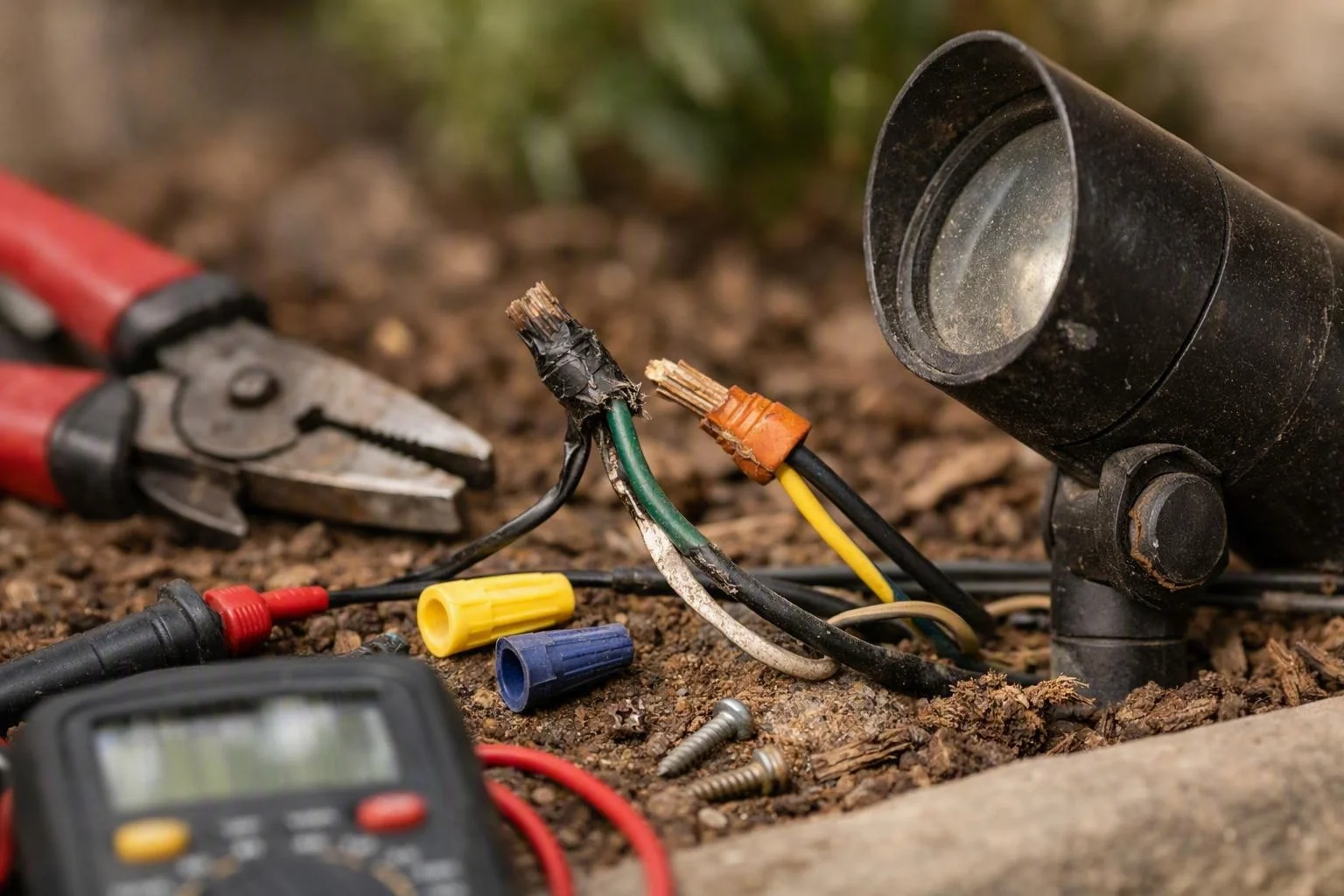
A landscape lighting system can fail again when the visible symptom is repaired without finding the electrical fault behind it. Low-voltage lighting still depends on sound wiring, secure connections, correct transformer output, and dry components.
We trace the circuit from the transformer through each lighting run to locate the cause of the repeat outage. Our team then corrects the damaged part and tests the repaired circuit under load.
Landscape Lighting Repair focuses on the source of the failure, not only the light that stopped working. You can contact us through Landscape Lighting Repair when an outdoor lighting failure keeps returning.
Which Repair Mistakes Cause Repeat Outages?
Repeat outages usually come from incomplete repair diagnosis, hidden wiring faults, damaged connections, or moisture that remains inside the system. The repair scope grows when the original cause is missed.
We inspect the landscape lighting transformer, wire connections, fixtures, and protective devices as one system. This approach helps us connect the symptom to the underlying fault and choose a lasting correction.
Replacing the Bulb Without Testing the Circuit
A failed landscape light bulb may be the result of a bad socket, an open circuit, or a voltage problem elsewhere in the run. Replacing the bulb alone can leave the electrical fault in place.
We use voltage testing at the socket and along the circuit before selecting a replacement. The cost depends on whether the fault is limited to the bulb or includes socket repair, wiring work, or another component.
Our fix addresses the failed part and verifies that the socket receives the proper electrical supply.
Ignoring Damaged or Buried Landscape Lighting Wire
Buried landscape lighting wire can develop insulation damage from digging, soil movement, roots, or exposure at a connection. Damaged cable can create a short circuit or interrupt power to fixtures farther along the run.
We perform wire tracing to locate the damaged section before opening or replacing accessible wiring. The cost depends on the fault location, the condition of the cable, and how easily the buried wire can be reached.
Our correction restores the damaged section with suitable outdoor wiring methods and includes testing for continuity and unwanted shorts.
Leaving Loose or Corroded Wire Connections in Place
A loose connection or corrosion at a wire connector can increase electrical resistance and cause flickering, dim lights, or a complete outage. Outdoor connections are especially vulnerable when moisture reaches an unprotected joint.
We remove compromised connectors, inspect the wire ends, and install a weatherproof connection when the conductors remain usable. The cost depends on the number of affected connections and whether corrosion has spread into the cable.
We test the repaired joint while the lighting circuit is operating so the connection can carry its intended load.
Blaming the Transformer Without Checking Its Load
A landscape lighting transformer may appear to be failing when the real issue is excessive system load, voltage drop, a short circuit, or a problem with circuit protection. Replacing the transformer without checking these conditions can lead to another outage.
We measure transformer output and review the load placed on each lighting run. The cost depends on whether the transformer is serviceable, whether wiring or fixtures are drawing too much power, and whether component replacement is needed.
Our correction matches the transformer to the working system and confirms stable output after the fault is repaired.
Overlooking Water Intrusion in Fixtures and Connections
Water intrusion can reach a landscape lighting fixture through a damaged gasket, an open seam, or a poorly protected connection. Moisture can cause corrosion, fixture failure, or a ground fault.
We inspect for moisture inside the fixture, socket, junction, and nearby connections. The cost depends on whether drying and sealing are enough or whether a water-damaged fixture and related wiring need replacement.
Our fix removes the source of moisture, replaces unsafe components, and checks the circuit for further electrical damage.
Using the Wrong Replacement Fixture or Component
A replacement fixture or low-voltage component can cause problems when its wattage, connector, voltage requirements, or physical design does not match the system. Poor fixture compatibility can create dim lighting, overheating, or recurring trips.
We compare the replacement fixture with the transformer output, system load, wiring, and connector type. The cost depends on the component selected and whether earlier mismatches damaged other parts.
Our repair uses compatible components and includes a check of the complete connection before the fixture is returned to service.
Repairing One Light Without Inspecting the Whole Run
A lighting run can contain an upstream fault that affects every downstream fixture. The system may use series or parallel connections, so repairing one visible light may not correct the condition affecting the rest of the circuit.
We inspect the run from the transformer through the affected fixture and continue to downstream fixtures when needed. The cost depends on the fault location, the number of damaged components, and the condition of the full run.
Our correction addresses the upstream fault and confirms that each connected fixture receives stable power.
Skipping a Final Test After the Repair
A repair is incomplete when the light turns on but the timer, photocell, voltage, or circuit behavior has not been checked. A hidden problem can return when the system operates under its normal load.
We complete system testing with voltage measurement, timer and photocell checks, and a load test. The cost depends on the testing required to confirm the full repair and identify any remaining fault.
Our final repair test verifies that the lighting system responds correctly and that the repaired circuit remains stable.
What Does a Lasting Landscape Lighting Repair Include?
A lasting landscape lighting repair includes diagnosis, inspection, correction, and verification. We use the repair findings to explain the work and identify any component that could cause another outage.
Our process normally covers these connected tasks:
What Changes the Cost of Correcting a Repeat Outage?
The cost of correcting a repeat landscape lighting outage depends on the fault location, wiring access, damaged components, water intrusion, and the amount of testing required; we explain the repair scope in the estimate.
Buried wiring and hidden connections can require more tracing and access work than a visible fixture issue. The system condition also matters because corrosion, damaged insulation, voltage drop, and mismatched components may affect more than one light.
We review the diagnosis, repair steps, replacement components, and verification work before proceeding. Requesting an estimate gives you an exact scope based on the actual condition of the lighting system.
When Should You Call for Landscape Lighting Repair?
Call San Bernardino Electrician when a landscape lighting outage keeps returning, the fault involves buried wiring or electrical connections, water is present, or reaching the fixture requires unsafe ladder work.
Some visual checks are safe when you stay on the ground and keep power off where appropriate. We handle electrical testing, buried wire tracing, connection repairs, and access work that creates an electrical safety or fall risk.
How San Bernardino Electrician Helps Prevent the Same Lighting Outage
San Bernardino Electrician helps prevent the same lighting outage by tracing the fault, inspecting the full run, correcting damaged wiring or components, and completing repair verification. We treat landscape lighting repair as an electrical diagnosis, not just a bulb replacement.
Our team checks the transformer, outdoor lighting wiring, wire connections, fixtures, controls, and moisture protection that affect reliable operation. We explain what caused the failure and what the repair includes before the work begins.
When the system is repaired, we perform electrical testing under operating conditions and confirm the timer or photocell response. Contact us to discuss a recurring landscape lighting outage and request an estimate for the needed repair scope.
Questions About Repeat Landscape Lighting Outages
Why does my landscape lighting keep going out after repair?
Landscape lighting can keep going out after repair when the original fault remains in the wiring, connections, transformer load, fixture, or controls. San Bernardino Electrician traces the circuit, tests the affected parts, corrects the underlying issue, and verifies the complete lighting run.
Can damaged landscape lighting wire cause repeated outages?
Yes, damaged landscape lighting wire can cause repeated outages by creating an open circuit, short circuit, or unstable connection. We use wire tracing and electrical testing to locate the damage and determine the correct repair.
How can water get into outdoor landscape lighting connections?
Water can enter outdoor landscape lighting connections through damaged gaskets, open seams, cracked fixtures, or unprotected wire joints. We inspect for moisture and corrosion, replace unsafe parts, and restore moisture protection before testing the circuit.
What should be tested before replacing a landscape lighting transformer?
Before replacing a landscape lighting transformer, the transformer output, system load, voltage drop, wiring, connections, and circuit protection should be tested. We complete circuit diagnosis first so the replacement addresses the actual cause of the outage.
Related Resources
Signs You Need Circuit Breaker Repair in San Bernardino, CA
When You Need ItWhen to Call an Electrician for Burning Smells and Hot Outlets in San Bernardino, CA
When You Need ItElectrical Wiring Warning Signs: When San Bernardino Homes Need an Electrician
When You Need ItSigns Your Outdoor and Landscape Lighting Has Electrical Damage in San Bernardino, CA