LED Lighting Benefits: Energy Savings, Comfort, and Long-Term Value
LED lighting installation improves energy efficiency, visual comfort, control and long-term value through efficient light sources, better distribution and reduced replacement needs; San Bernardino Electrician installs, repairs and replaces lighting to match the space.
Get a Free EstimateWhat Are the Main Benefits of LED Lighting Installation?
LED lighting installation provides efficient illumination, more control over the light environment and a practical path to long-term lighting value.
LED lighting can support energy efficiency because the LED light source turns more electrical energy into useful light. It can also improve visual comfort through controlled brightness, color quality and light distribution.
Lighting controls add flexibility for ambient lighting, task lighting and accent lighting. We match the LED fixture and controls to the room so the upgrade supports how you use the space.
How Does LED Lighting Reduce Energy Use?
LED lighting reduces energy use by converting more electrical input into useful light and producing less excess heat than less efficient light sources.
Luminous efficacy describes how effectively a light source produces visible light from electrical energy. A more efficient source can reduce the lighting load needed to produce comfortable brightness.
Lower heat output can also reduce the amount of unwanted heat added by lighting. We review the fixture, wiring and expected use before recommending an energy-efficient lighting upgrade.
How Can LED Lighting Improve Comfort and Visibility?
Visual comfort improves when color quality, brightness, distribution and glare control match the room and task.
Color temperature affects whether light appears warmer or cooler. Color rendering affects how naturally surfaces and objects appear under the light.
Glare can make a room uncomfortable, while poor distribution can leave dark areas or harsh bright spots. We position task lighting and select lenses, fixture housings and controls to create more even light distribution.
Flicker can affect comfort for some people and may point to a driver, dimmer or wiring concern. We check the lighting components and controls when flicker appears after installation.
Why Do LEDs Offer Long-Term Lighting Value?
LED lifespan supports long-term value through durable components, fewer replacement needs and operating costs that depend on the fixture, controls and usage pattern.
LED systems can include an LED chip, driver, heat sink, lens and fixture housing. Each part affects lighting reliability, heat management and fixture compatibility.
Reduced lamp replacement can simplify maintenance, especially where fixtures are difficult to reach. We check the fixture condition and driver before deciding whether an LED retrofit or a complete LED fixture replacement makes more sense.
Which LED Lighting Features Matter for Each Room?
Room use determines the right brightness, color temperature, distribution and control method. Our team connects each feature to the work performed in the space.
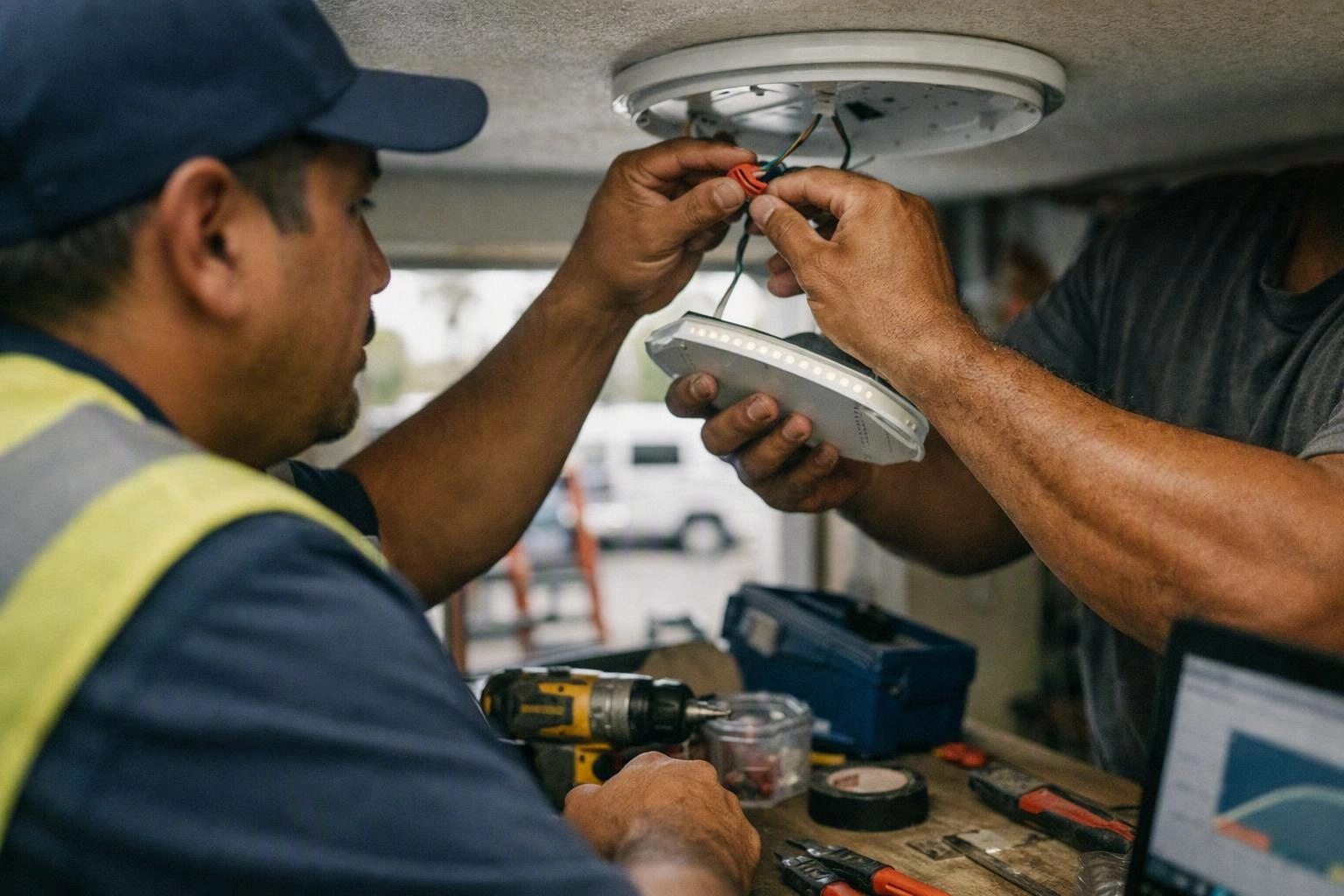
We can also plan recessed LED lighting, under-cabinet LED lighting, LED ceiling fixtures and motion-sensor lighting around the room’s function.
What Should We Check Before an LED Lighting Installation?
We check the existing wiring, fixture or mounting location, controls and intended light level before recommending an LED lighting installation.
This installation assessment helps us choose compatible fixtures and controls. It also helps identify wiring or mounting issues before they affect lighting performance.
When Is LED Lighting Repair or Bulb Replacement the Better Solution?
Lighting repair or light bulb replacement is appropriate when the existing system is suitable but a bulb, driver, connection or control is causing the lighting problem.
An LED light bulb may fail while the fixture remains in good condition. We test the bulb, socket, switch and connections before completing a light bulb replacement.
An LED fixture may need repair when a loose connection, failed driver or switch fault causes intermittent lighting. We trace the fault and determine whether repair or fixture replacement provides the more reliable result.
We connect the repair decision to fixture compatibility, electrical safety and expected maintenance. When the system supports an upgrade, our team can also plan Lighting Installation.
How Do We Plan an LED Lighting Upgrade?
We plan an LED lighting upgrade by assessing the space, selecting compatible equipment, checking the electrical connections, installing the lighting and testing its operation.
Our team explains what the estimate includes before work begins. Free Estimates Available, and the scope depends on the fixture choice, wiring condition, controls and installation requirements.
Questions About LED Lighting Benefits
Are LED lights suitable for every room?
Yes, LED lights can suit most rooms when San Bernardino Electrician matches the fixture, color temperature, distribution and controls to the space.
Can existing light fixtures use LED bulbs?
Yes, existing light fixtures can use LED bulbs when the socket, fixture rating, available space and electrical connections are compatible.
Why do LED lights flicker after installation?
LED lights can flicker after installation because of dimmer incompatibility, a failing driver, a loose connection or a switch fault.
Do LED lights work with dimmer switches?
Yes, LED lights work with dimmer switches when the LED fixture, bulb, driver and dimmer are compatible.
Should I replace an LED bulb or repair the fixture?
Replace an LED bulb when the fixture and socket work correctly, and choose fixture repair when the driver, connection, switch or housing is causing the fault.
What changes the price of an LED lighting installation?
The price depends on the fixture type, wiring condition, mounting location, controls, circuit needs and amount of installation work. We review those factors and provide an estimate for the planned scope.
San Bernardino Electrician plans LED lighting installation, LED upgrades, lighting repair and light bulb replacement around the space, electrical wiring and control compatibility. Contact us for an assessment and an estimate that explains the work.
Related Resources
Signs You Need Circuit Breaker Repair in San Bernardino, CA
When You Need ItWhen to Call an Electrician for Burning Smells and Hot Outlets in San Bernardino, CA
When You Need ItElectrical Wiring Warning Signs: When San Bernardino Homes Need an Electrician
When You Need ItSigns Your Outdoor and Landscape Lighting Has Electrical Damage in San Bernardino, CA