Water Damage Electrical Repair: Insurance Claims and Safe Next Steps
Water damage electrical repair may be covered by insurance when the policy covers the cause of the water loss and the damage is documented; San Bernardino Electrician can inspect affected circuits, lighting, and bathroom fans, make the area safe, and provide an estimate for the claim.
Get a Free EstimateDoes Insurance Cover Electrical Damage From Water?
Yes, homeowners insurance may cover electrical damage from water when the policy covers the cause of the water loss and the damage falls within the policy terms. San Bernardino Electrician can inspect the affected system and document the repair needs for your insurance claim.
Coverage often depends on whether the loss came from a covered peril, such as sudden and accidental damage from a leaking pipe. A policy exclusion may apply to flood damage, wear and tear, poor maintenance, or mold-related loss.
The cause of loss and the resulting damage are reviewed separately. Your deductible and policy conditions can also affect how the claim is handled.
What Water Damage Should You Document Before Electrical Repair?
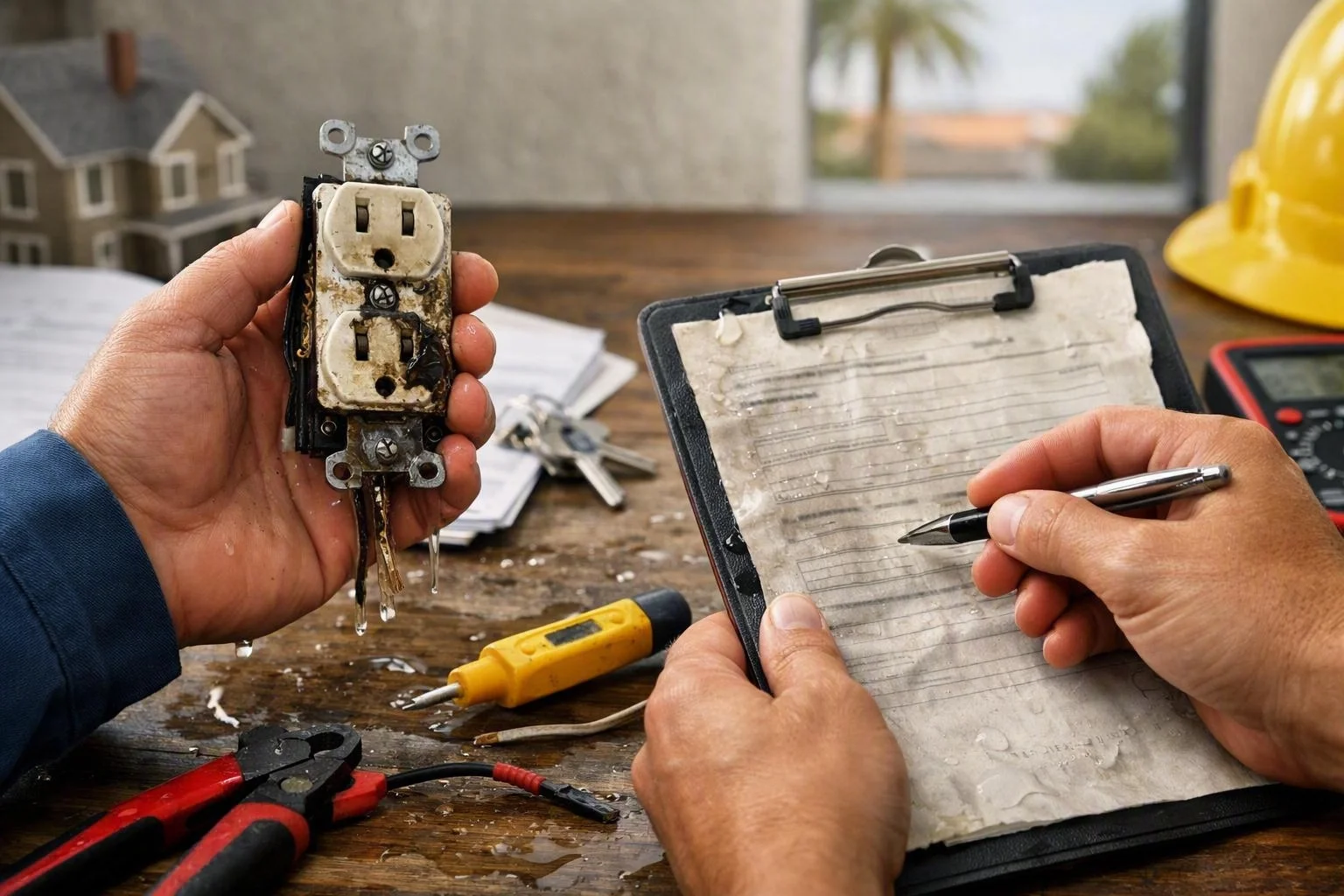
Water damage evidence should show the water source, affected electrical components, visible damage, and steps taken to prevent further loss. Clear claim documentation helps connect the water intrusion to the electrical damage.
Photographs and videos can show the circuit breaker, electrical panel, wiring, light fixture, and bathroom fan before cleanup or removal. Record where standing water appeared and whether smoke, sparking, discoloration, or burning smells were present.
Keep receipts for temporary repairs, water extraction, emergency steps, and replacement materials. Do not discard damaged components until the insurance adjuster or our team confirms that the evidence has been documented.
What Are the Safe Next Steps for a Water-Damaged Electrical System?
Safe next steps are to avoid wet electrical equipment, isolate power only when you can do so safely, document the damage, notify the insurer, and arrange an electrical inspection before restoring power. Electrical safety comes first because water can leave hidden moisture inside equipment and wiring.
Our team checks for moisture exposure, damaged components, and unsafe conditions before recommending power restoration. If you cannot isolate power safely, leave the area and contact San Bernardino Electrician.
How Does an Insurance Claim for Electrical Water Damage Work?
An electrical water-damage claim generally moves from documentation and insurer contact through inspection, scope approval, repair, and final invoice review. The exact process can depend on the insurance policy, cause of loss, and adjuster requirements.
Our estimate can help separate electrical repairs from water removal, drywall work, or other property damage. Keep copies of the inspection report, approved scope, receipts, and final invoice.
Which Mistakes Can Jeopardize an Electrical Water-Damage Claim?
A water-damage electrical claim can be weakened by removing evidence, delaying notice, restoring unsafe power, or authorizing work without coordinating with the insurer. Our team can help document the electrical condition before repair decisions are made.
Temporary repairs should prevent further loss without hiding the original damage. We document what must be made safe and explain which work requires claim coordination.
What Does Our Electrical Inspection Cover After Water Damage?
Our electrical inspection identifies water-affected components and determines whether circuit breakers, lighting, or bathroom fans require repair or replacement before safe use. San Bernardino Electrician reviews the electrical panel, wiring, connections, and grounding for signs of moisture exposure.
We inspect affected circuits for corrosion, trapped moisture, damaged insulation, loose connections, and unsafe operation. Our team can also assess whether Circuit Breaker Repair or lighting repair belongs in the claim scope.
Bathroom fan repair may be needed when water reaches the fan housing, switch, wiring, or nearby ceiling connection. We record the affected components and the testing needed before the system is returned to service.
What Should an Electrical Repair Estimate Include for an Insurance Claim?
An electrical repair estimate should identify the damaged components, required work, materials, testing, and documentation needed for the insurer to review the scope. A clear estimate connects each recommended repair to the observed water damage.
Our scope of work can identify circuit breaker repair, electrical panel work, water-affected wiring repair, lighting repair, and bathroom fan repair when those items are involved. We also separate testing, code-related corrections, labor, and materials so the insurance adjuster can review the work.
The estimate should explain whether a component can be safely repaired or needs replacement. We provide supporting inspection notes and update the records when the approved work is complete.
How Can You Request an Electrical Water-Damage Assessment?
You can request an electrical water-damage assessment from San Bernardino Electrician by sharing the affected areas and insurance documentation so our team can determine the repair scope and provide a quote. Send photographs, the water source, the claim number when available, and any adjuster instructions.
We can review concerns involving circuit breaker repair, lighting repair, bathroom fan repair, the electrical panel, and water-affected wiring. Free Estimates Available applies to requesting an estimate for the work, while insurance approval remains subject to your policy and insurer.
Contact our team through our electrical assessment request. We will explain the inspection findings, repair scope, and documentation needed for the claim.
Questions About Water Damage Electrical Repair Claims
Will insurance pay for replacing a water-damaged circuit breaker?
San Bernardino Electrician can inspect a water-damaged circuit breaker and document whether replacement is needed, but insurance payment depends on the covered cause of loss, policy terms, exclusions, and claim approval.
Does homeowners insurance cover electrical damage caused by a leaking pipe?
Homeowners insurance may cover electrical damage caused by a leaking pipe when the leak is sudden and accidental and the policy covers that cause of loss. Policy exclusions, maintenance issues, and the deductible can affect the claim.
Can you turn the power back on after electrical equipment gets wet?
You should not turn the power back on until the affected electrical system has been inspected and confirmed safe. Wet equipment, wiring, panels, and fixtures can remain hazardous after visible water is gone.
Should you wait for the insurance adjuster before repairing water-damaged wiring?
You should contact the insurer and document the damage promptly, but unsafe electrical conditions may require immediate temporary action. Coordinate with the adjuster when possible and keep the damaged wiring available for inspection and claim documentation.
Does insurance cover water damage caused by a flood?
Standard homeowners insurance commonly has a flood exclusion, so flood-related electrical damage may require separate coverage. Review the policy and ask the insurer how the flood cause of loss applies to the electrical claim.
Related Resources
Signs You Need Circuit Breaker Repair in San Bernardino, CA
When You Need ItWhen to Call an Electrician for Burning Smells and Hot Outlets in San Bernardino, CA
When You Need ItElectrical Wiring Warning Signs: When San Bernardino Homes Need an Electrician
When You Need ItSigns Your Outdoor and Landscape Lighting Has Electrical Damage in San Bernardino, CA