Circuit Breaker Repair and Replacement: Cost, Process, and Time in San Bernardino, California
Circuit breaker repair and replacement cost and time depend on the fault, breaker compatibility, panel condition, access, and whether troubleshooting finds a wider circuit issue; San Bernardino Electrician diagnoses the problem, explains the work, and provides an exact quote before proceeding.
Get a Free EstimateWhat Changes the Cost of Circuit Breaker Repair or Replacement?
Circuit breaker repair or replacement cost changes with the fault location, breaker type and compatibility, panel condition, access, and any related wiring work. We inspect the complete circuit before recommending a repair or a compatible replacement breaker.
Higher seasonal electrical demand in lower-elevation developed areas of San Bernardino, California can contribute to breaker trips and reveal circuit problems that need diagnosis or repair.
| Factor | Why it changes the cost | What to prepare |
|---|---|---|
| Breaker fault | A defective circuit breaker may need replacement, while a wider electrical fault may require added troubleshooting. | Note when the breaker trips and what was operating at the time. |
| Breaker type and compatibility | The replacement must match the electrical panel and circuit requirements. | Keep the panel label and existing breaker information available. |
| Electrical panel condition | Heat damage, wear, or a poor bus connection can expand the work beyond the breaker. | Share any history of panel repairs or unusual heat. |
| Circuit wiring | Damaged wiring, a loose connection, or a short circuit can require wiring repair. | Report burning odors, buzzing, sparking, or visible damage. |
| Access conditions | Restricted access can make inspection and safe isolation more involved. | Clear the area around the electrical panel. |
When Does a Tripping Breaker Need Repair?
A repeatedly tripping circuit breaker needs diagnosis when the trip continues after you reduce the load or when signs of heat, damage, or a wiring fault appear. We identify whether the cause is an overloaded circuit, short circuit, ground fault, loose connection, or damaged wiring.
A breaker keeps tripping when the circuit load exceeds its safe operation or when an electrical fault remains. We inspect the electrical panel and connected circuit instead of treating every trip as a bad breaker.
If the breaker will not reset, stop forcing the handle. Our team checks for unsafe conditions before attempting further testing.
How We Diagnose and Repair the Breaker Problem
Electrical troubleshooting separates a defective breaker from a circuit problem before we choose the repair process or replacement process.
What We Check Before Recommending Replacement
Breaker compatibility depends on the panel brand, amperage rating, bus connection, circuit load, and wiring condition. We compare those details before selecting a compatible replacement breaker.
A breaker handle that feels loose does not prove that the breaker is the only problem. Our team checks the terminal connection and circuit behavior so the replacement process addresses the underlying electrical fault.
What Changes the Time Required for This Breaker Job?
Circuit breaker repair or replacement time changes with the ease of access, the condition of the panel, the location of the fault, and whether related wiring must be repaired. We can explain the expected work stages after electrical troubleshooting identifies the problem.
A simple replacement process has fewer steps when the panel and wiring are accessible and suitable. A fault that extends into circuit wiring requires more testing and repair before the circuit can be returned to safe operation.
Five Ways to Avoid Unnecessary Electrical Repair Cost
Good circuit information helps us diagnose the problem without replacing parts that are still suitable. These steps also help protect the electrical panel and connected equipment.
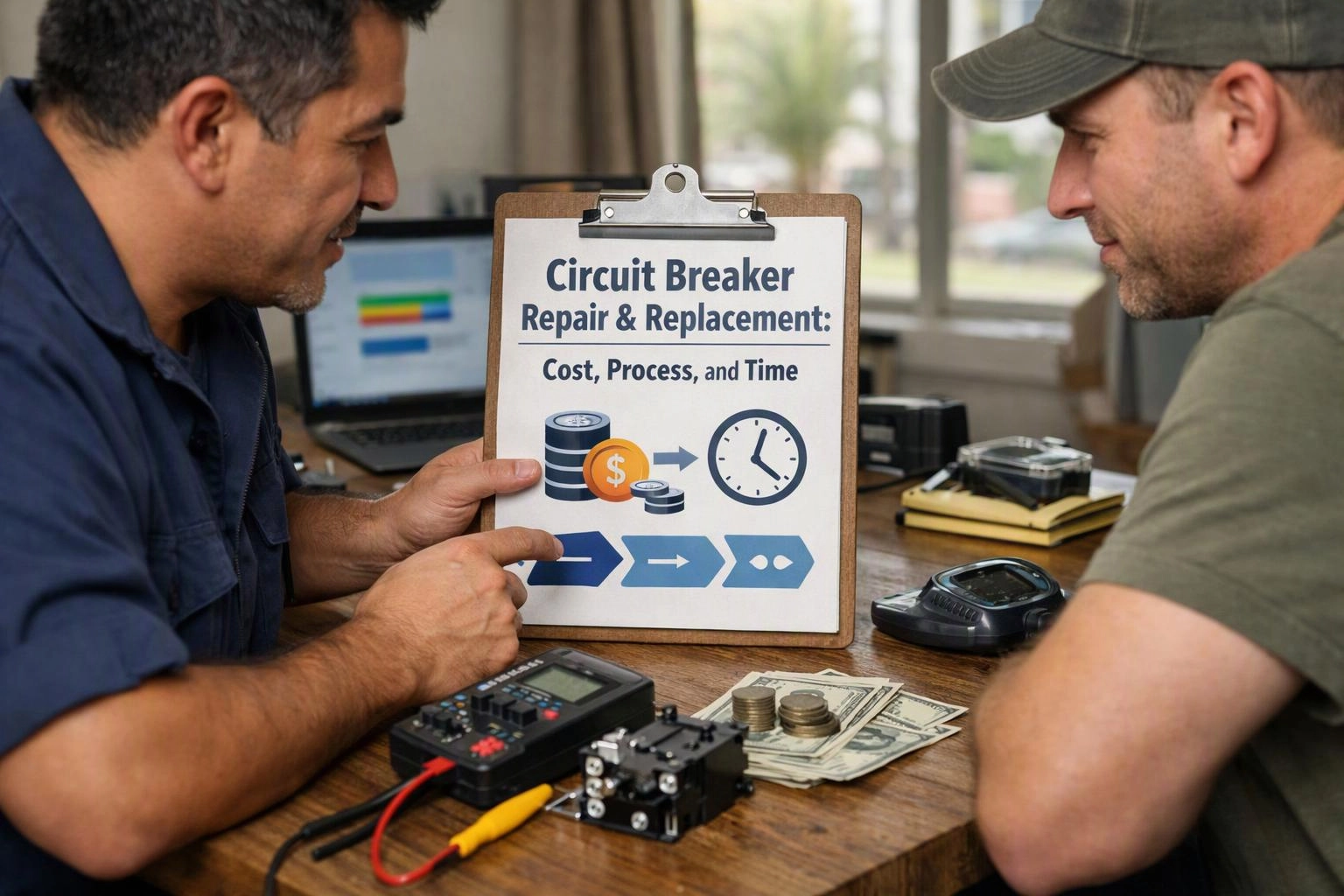
What San Bernardino Electrician Includes in an Accurate Quote
San Bernardino Electrician's Free Estimates Available offer explains the diagnosed fault, recommended repair or replacement, compatible parts, related work, and quoted scope before work begins.
Our quote connects the electrical diagnosis to the proposed circuit breaker repair or circuit breaker replacement. We identify whether wiring repair, panel work, or a replacement part belongs in the work scope.
For an exact quote, contact us with the breaker trip history, panel information, and any signs of damage. We use those details to plan the inspection and explain the work that applies to your electrical panel.
How to Prepare for an Accurate Breaker Repair Quote
Breaker repair quote preparation starts with clear information about the electrical panel and the symptoms you have seen. Share these details with our team before the visit.
Can You Replace a Circuit Breaker Yourself?
No, circuit breaker replacement involves the electrical panel and should be handled by San Bernardino Electrician after the underlying fault is diagnosed.
Electrical panel safety concerns include energized electrical parts, incorrect breaker compatibility, and hidden circuit faults. We use electrical troubleshooting and safe isolation to determine what caused the failure before completing the replacement.
What to Do if the Breaker Trips Before the Appointment
A repeated breaker trip requires electrical safety steps before our team arrives. Turn off or unplug nonessential loads on the affected circuit and do not keep resetting a breaker that trips again.
Burning smell, sparking, smoke, visible damage, or heat near the electrical panel can indicate an electrical emergency. Move away from the area and contact us for guidance instead of opening the panel or touching energized parts.
Keep notes about what happened so we can use the information during electrical troubleshooting. Our crew will check whether the cause is an overloaded circuit, short circuit, ground fault, or another wiring problem.
Questions About Circuit Breaker Repair and Replacement
What causes a circuit breaker to keep tripping?
San Bernardino Electrician finds that repeated trips can come from an overloaded circuit, short circuit, ground fault, loose connection, damaged wiring, or a defective breaker.
Can a bad breaker damage an electrical panel?
A bad breaker can be associated with heat or a poor connection at the panel bus. We inspect the breaker, terminal connection, and surrounding panel area to identify damage and determine the correct repair.
Should the breaker be reset before requesting electrical troubleshooting?
Reset the breaker only when there are no signs of burning, sparking, heat, or damage and the load has been reduced. Stop if the breaker trips again, and let our team diagnose the electrical fault.
What information helps San Bernardino Electrician prepare a breaker repair quote?
Breaker trip history, panel details, appliance load, burning odor, electrical noise, visible damage, and previous electrical work help us prepare for diagnosis and explain the exact quote.
Contact San Bernardino Electrician for electrical troubleshooting, a clear work scope, and an exact quote for circuit breaker repair or circuit breaker replacement.
Request a breaker quoteRelated Resources
Signs You Need Circuit Breaker Repair in San Bernardino, CA
When You Need ItWhen to Call an Electrician for Burning Smells and Hot Outlets in San Bernardino, CA
When You Need ItElectrical Wiring Warning Signs: When San Bernardino Homes Need an Electrician
When You Need ItFlickering Lights: How to Know When You Need an Electrician