Emergency Fuse Box and Breaker Repair for Industrial Facilities
Emergency fuse box and breaker repair for industrial facilities is work San Bernardino Electrician performs by identifying electrical faults, securing unsafe equipment, repairing the affected system, and checking connected lighting circuits.
Get a Free EstimateWhy Industrial Facilities Need Emergency Fuse and Breaker Repair
Industrial facilities need emergency electrical repair when a fuse box, circuit breaker, or connected lighting circuit threatens safe and continuous operations. We identify the failure, isolate the affected equipment, and plan the repair around the facility’s operating needs.
Production equipment can stop when an electrical fault interrupts power. A damaged lighting system can also create unsafe work areas and make equipment checks harder.
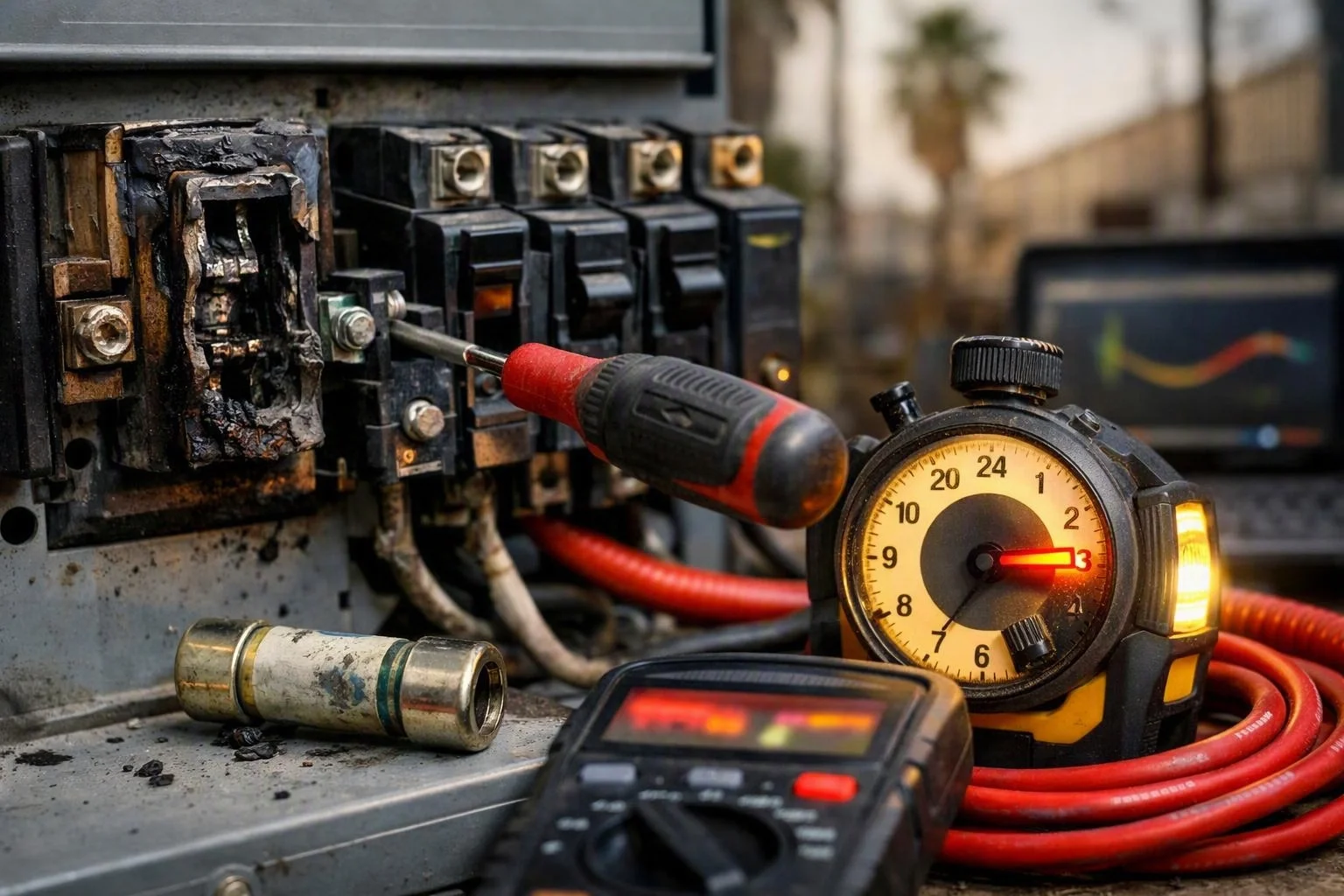
How Industrial Electrical Needs Differ from Other Customers
Industrial electrical repair requires greater attention to distribution equipment, operational continuity, equipment coordination, and site safety than residential repair. We consider how the affected circuit connects to production areas, controls, and other electrical panels.
The comparison below shows why the repair approach changes by customer type.
| What is being compared | Industrial facilities | Other customers |
|---|---|---|
| Electrical distribution | May include multiple panels, feeders, and production circuits. | Often involves a simpler distribution layout. |
| Operational continuity | A power interruption can affect equipment, workflow, and production areas. | The interruption may affect fewer connected operations. |
| Equipment coordination | Repairs must account for machinery, controls, and connected loads. | Repairs usually involve household or smaller commercial loads. |
| Safety controls | Access procedures and equipment isolation may be part of the work. | Safety controls are usually limited to the affected premises and panel. |
| Lighting impact | Industrial lighting and emergency lighting may serve large work areas. | Lighting problems may affect a smaller area. |
What We Check During an Emergency Fuse Box or Breaker Assessment
An emergency fuse box or breaker assessment checks the failed protective device, connected conductors, signs of overheating, and the fault that caused the interruption. Our team begins with safe access and fault diagnosis before deciding whether the issue needs fuse replacement, breaker replacement, or broader panel troubleshooting.
We inspect the fuse box, circuit breaker, and electrical panel for overcurrent conditions, a short circuit, a loose connection, and heat damage. We also consider the electrical load and look for wiring damage that could cause the fault to return.
Testing helps us separate a failed component from a deeper distribution problem. We explain the repair scope after fault isolation so the facility can make a clear operational decision.
When a Fuse or Breaker Problem Also Affects Lighting
A lighting circuit problem can reduce visibility across an industrial work area and may signal a wider wiring fault. We trace the power interruption to determine whether industrial lighting, emergency lighting, or another connected circuit is involved.
Our team checks fixtures, conductors, terminals, and panel connections before restoring affected lighting. We also complete functional testing so the repaired circuit operates as intended.
What Industrial Facilities Need from Emergency Electrical Repair?
Industrial facilities need emergency electrical repair that isolates the fault, protects connected equipment, explains the repair scope, and supports a safe return to operation. We connect each repair decision to the condition of the equipment and the facility’s operating plan.
Our work focuses on reducing further electrical risk while giving site staff clear information about the affected system.
Key Features That Matter in Industrial Fuse and Breaker Repair
Industrial fuse and breaker repair needs more than a replacement part when the cause of failure has not been identified. We match the repair method to the fault, the panel condition, and the connected load.
These service features help make the work clear and controlled.
Common Challenges During Industrial Electrical Emergencies
Industrial electrical emergencies can be difficult to scope when the fault source is not visible from the first affected panel. We trace the problem through the distribution system and protect connected equipment during the assessment.
Site conditions can also change how we access and test the affected circuit.
How We Approach Fuse Box, Breaker, and Lighting Repairs
We approach industrial electrical repairs by assessing the fault, making the circuit safe, completing the needed repair, testing the system, and explaining the estimate before work proceeds. Our process keeps fault isolation and equipment protection at the center of the job.
What Changes the Cost of an Industrial Fuse or Breaker Repair?
The cost of an industrial fuse or breaker repair depends on the failed component, fault location, wiring condition, panel configuration, access requirements, and whether lighting circuits are also affected. We inspect these factors before preparing a repair estimate.
Fuse type and circuit breaker type can change the required replacement work. Electrical panel condition, wiring damage, and the location of the lighting circuit can expand the repair scope.
Access requirements also affect how we plan the work. We explain what the estimate includes, such as diagnosis, parts, repair labor, safety checks, and functional testing.
When Should an Industrial Facility Stop Using the Affected Circuit?
An industrial facility should stop using the affected circuit when it shows burning, arcing, unusual heat, repeated trips, visible damage, or another immediate electrical hazard. We recommend keeping the area clear and avoiding contact with damaged equipment until the circuit can be assessed safely.
A burning smell or visible arcing can indicate overheating or a short circuit. Heat damage, a damaged fuse, and repeated breaker trips can also signal an electrical shock hazard or a fault that needs further diagnosis.
How to Request Industrial Fuse Box and Breaker Repair
To request industrial fuse box and breaker repair, provide the facility address, affected equipment, visible warning signs, and current circuit condition so we can scope the work and prepare an estimate. San Bernardino Electrician uses this information to plan the assessment and identify the safest starting point.
Tell our team whether the issue involves fuse box repair, circuit breaker repair, lighting repair, or a wider power interruption. Include details about burning smells, visible arcing, repeated trips, heat damage, and equipment that lost power.
Our crew reviews the site information, performs fault diagnosis, and explains the repair estimate before work proceeds. Contact us through industrial electrical repair support.
Get a Free EstimateQuestions About Industrial Fuse, Breaker, and Lighting Repair
Can a tripped industrial breaker indicate a larger electrical problem?
Yes, a tripped industrial breaker can indicate an overcurrent, short circuit, loose connection, overheating, or another electrical fault. San Bernardino Electrician checks the breaker, connected conductors, panel condition, and electrical load before restoring the circuit.
What should facility staff do before industrial electrical repair arrives?
Facility staff should keep people away from damaged equipment, avoid resetting a repeatedly tripped breaker, and report burning smells, visible arcing, heat damage, or shock hazards. Staff should follow the site’s safety procedure and provide our team with information about the affected circuit.
Can a damaged lighting circuit affect other industrial equipment?
Yes, a damaged lighting circuit can affect other equipment when circuits share distribution equipment, conductors, or panel connections. We trace the lighting outage and check nearby circuits for wiring damage, overheating, and abnormal electrical conditions.
What information should I provide when requesting emergency industrial electrical repair?
Provide the facility address, affected equipment, panel location, visible warning signs, recent breaker trips, and whether industrial lighting or emergency lighting is also affected. This information helps us plan fault isolation and prepare a repair estimate.
How does an industrial fuse box inspection identify the source of a failure?
An industrial fuse box inspection identifies the source of a failure by checking the protective device, terminals, conductors, panel enclosure, connected load, and signs of overheating. We use circuit isolation and functional testing to separate the failed component from a deeper wiring or distribution fault.
Related Resources
Signs You Need Circuit Breaker Repair in San Bernardino, CA
When You Need ItWhen to Call an Electrician for Burning Smells and Hot Outlets in San Bernardino, CA
When You Need ItElectrical Wiring Warning Signs: When San Bernardino Homes Need an Electrician
When You Need ItSigns Your Outdoor and Landscape Lighting Has Electrical Damage in San Bernardino, CA